Slack launches in India, scouts for firms designing digital workplaces

A survey by Slack of over 2,000 Indian knowledge workers found 4 in 5 respondents desired flexibility, and would switch jobs if their employer didn’t provide it

American workplace collaboration platform Slack has officially launched in India. The firm said it is on a mission to help Indian companies navigate the transition to a hybrid workplace by establishing a digital headquarters (‘Digital HQ’).

Having long championed a digital-first approach to work, Slack’s leadership in the workplace collaboration space was further cemented by the rapid shift to remote work in early 2020 brought about by the pandemic. Today – as the impact of the pandemic eases and Indian companies increasingly shift to a hybrid work model – Slack is calling for leaders to be as thoughtful in designing their digital workplaces as they did in designing their physical offices before the pandemic hit.

“Adopting Slack as a Digital HQ allows Indian companies to connect their teams, tools, customers, and partners in a digital place that’s fast, flexible and inclusive for a work-from-anywhere world,” said the company. “A Digital HQ allows work to flow, breaking down communication and collaboration silos, internally and externally; automates tasks that take away time from deep, meaningful work; and enables new, flexible ways of working, striking the right balance between synchronous and asynchronous.”

In July 2021, Salesforce.com completed the acquisition of Slack Technologies, Inc. for $27.7 billion. Salesforce has had a presence in India since 2005 and today has over 6,500 employees across Mumbai, Delhi, Bangalore and Hyderabad.

A recent study conducted by Slack involving over 2,000 Indian knowledge workers, The Reinvention of Work, found 4 in 5 respondents had a desire for flexibility, and a significant 80 per cent would seek a role elsewhere if their employer didn’t accommodate this. “Indian companies are keenly aware that the Great Resignation and the Great Relocation are very real, as employee expectations change and the war for talent heats up. Embracing Slack as their Digital HQ provides Indian knowledge workers with the ability to do their jobs from anywhere, at any time,” said the company.

For the many positives brought about by the proliferation of workplace apps that emerged as a response to the shift to remote work in 2020, there have been some challenges. In the same Slack study, Indian knowledge workers said they were wasting an average of 47 minutes a day switching between the various apps they use to do their jobs. One in five respondents said they were losing 10 hours a week – that’s nearly 10 working weeks a year. With over 2,600 app integrations, the Slack platform is purpose-built to address this loss in productivity and improve employee experience in the process.

One of India’s fastest growing internet commerce platforms, Meesho, has embraced Slack as its Digital HQ to save time, build company culture, streamline processes, and improve the way they work. “With the pivot towards remote working, multiple apps and systems were a huge hindrance to productivity and collaboration,” said Shikhar Saxena, Group Product Manager, Meesho. “We are glad to have Slack as a partner where everything happens in one channel, and what used to take a couple of days is now resolved in a matter of hours.”

Slack, which has users in over 150 countries globally, already has a significant following in India – representing one of the largest free user bases for Slack and positioned in its top 10 markets for paid teams globally.

Slack has, in fact, been operating in India for four years, establishing a product engineering team in Pune in 2018 following the company’s acquisition of Astro. The Slack India team has since grown to include a go-to-market function in the last year, and now has over 120 employees across four offices in Pune, Mumbai, Bengaluru and Gurgaon. Indian companies such as Zomato, Dreamsports, Freecharge, Razorpay, and many more are relying on Slack to drive their businesses forward.

Massive podcast outage after Spotify fails to renew security certificate

Due to an outage on podcast hosting platform owned by Spotify, Megaphone, podcast listeners could not access many of their shows for more than eight hours this week.

Due to an outage on podcast hosting platform owned by Spotify, Megaphone, podcast listeners could not access many of their shows for more than eight hours this week.

According to The Verge, the outage stemmed from the company’s failure to renew Megaphone’s security certificate.

“Megaphone experienced a platform outage due to an issue related to our SSL certificate,” Spotify spokesperson Erin Styles was quoted as saying in a statement.

“During the outage, clients were unable to access the Megaphone CMS and podcast listeners were unable to download podcast episodes from Megaphone-hosted publishers. Megaphone service has since been restored,” Styles added.

As per the report, it is a simple mistake with big ramifications.

Megaphone, which inserts dynamic ads into episodes, hosts many of the industry’s top shows.

It also distributes shows on platforms beyond Spotify, including Apple Podcasts and Google Podcasts. Spotify hosts many of its own licensed and owned shows on Megaphone, the report said.

Styles said that the company is reaching out to affected publishers.

Spotify acquired Megaphone in December 2020 for $235 million, making it the streamer’s biggest purchase in its quest to build a comprehensive podcasting tech stack.

Spotify did not comment as to why Megaphone’s SSL certificate was left to expire and why it took so long to fix. The certificate expired at 8PM ET on Monday, according to data found by Podnews. The issue was not resolved for another eight hours, according to the platform’s status page.

Even after Megaphone came back online just before 6AM ET, podcasters experienced delays with the Megaphone CMS. As of 9:45AM, the company said the issue was fully resolved.

Annoyed users cancel Netflix subscriptions during password sharing test

A Netflix experiment to crack down on password sharing outside of households has left users flummoxed, forcing some of them to cancel their subscriptions

A Netflix experiment to crack down on password sharing outside of households has left users flummoxed, as the streaming giant increased subscription fees for such users, forcing some of them to cancel their subscriptions.

In March, Netflix quietly rolled out an experiment among customers in three small markets in Latin America, asking them to pay extra when sharing their account passwords outside their homes.

The streaming giant announced the new password-sharing policy in Peru, Chile, and Costa Rica.

According to global tech news site Rest of World, for some Netflix users, the price increase has been enough to convince them to cancel their accounts outright.

“Others continue to share their accounts across households without any notification of the policy change or have ignored the new rule without facing enforcement,” the report said.

Overall, the lack of clarity around how Netflix determines a “household” and the differing charges levied on different customers have left subscribers in the test confused, “risking action from consumer regulators”.

As the OTT platforms witness a surge in subscriptions amid the pandemic, the problem of password sharing has also grown and resulted in stalled user growth for several players.

The major OTT giants, including Netflix, are working relentlessly to fix the problem of password sharing.

Netflix’s terms of use have always stated that subscribers are not allowed to share accounts outside of their household, but the platform had never previously enforced extra charges for infringing the policy.

For the first time, the company is defining “household” as exclusively people a subscriber lives with, said the report.

Netflix representatives told Rest of World that it knows some subscribers understand “household” as related to immediate family but that it has always defined the term as people living in the same building.

The company said different subscribers might be paying differing charges.

Peru’s consumer rights agency, the National Institute for the Defense of Free Competition and the Protection of Intellectual Property (Indecopi), said that the “differing charges could be considered a way of discriminating against users arbitrarily”.

Netflix saw its stock tumbling by 20 per cent after it reported a loss of 2 lakh paid subscribers in the first quarter of 2022, its first subscriber loss in over a decade.

Moreover, it forecast a global paid subscriber loss of 20 lakh for the April-June quarter (Q2).

Netflix is fast losing long-term subscribers. According to a survey report by The Information, new data show that people who have been subscribers to Netflix for more than three years accounted for 13 per cent of cancellations in the first quarter this year.

Amazon to end Cloud Cam service, offer free Blink Mini to owners

Tech giant Amazon is shutting down support for its Cloud Cam security camera and offering owners a free Blink Mini to replace it.

Tech giant Amazon is shutting down support for its Cloud Cam security camera and offering owners a free Blink Mini to replace it.

Cloud Cam owners will be able to use their cameras and download video until December 2 of this year, after which all recordings will be deleted and the hardware will no longer function, reports The Verge, which has obtained a copy of an email sent to customers announcing the change.

Customers with the Cloud Cam Key Edition will also lose the ability to connect to smart locks, although they can get a free fourth-generation Echo to replace the functionality.

“As the number of Alexa smart home devices continues to grow, we are focusing efforts on Ring, Blink, and other technologies that make your home smarter and simplify your everyday routines. Therefore, we have decided to no longer continue support for Amazon Cloud Cam and its companion apps,” Amazon said in its email, which was also posted on Reddit.

In a statement to MacRumors, Amazon added “we will continue to offer innovative smart home security solutions for our customers through Amazon’s Ring and Blink brands”. It also specified that it will give Blink Mini cameras to users who are “still actively using their Cloud Cam”.

Amazon smart home spokesperson Jocelyn Shaw clarified to The Verge that Cloud Cam customers who have been active in the past six months will be eligible for replacement of hardware, and customers will get one Blink Mini for each active Cloud Cam they were using, or one Blink Mini and Echo for each Cloud Cam Key Edition.

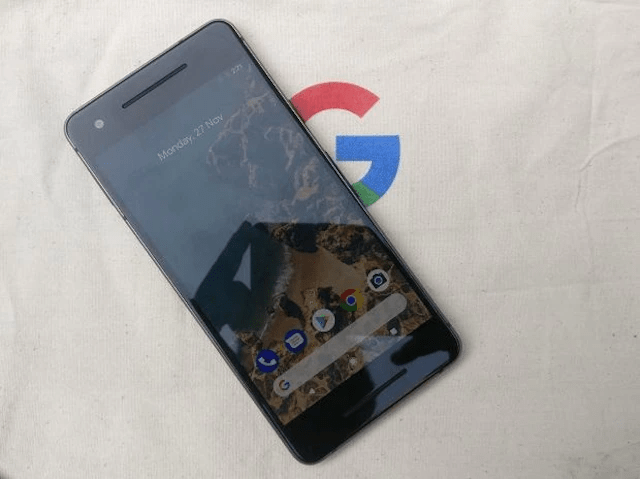
Alleged prototype of Google Pixel 7 prototype hits eBay ahead of its launch

An alleged prototype of Google’s upcoming Pixel 7 smartphone has been offered on eBay, giving the audience a sneak peek at the device months before its official release.

An alleged prototype of Google’s upcoming Pixel 7 smartphone has been offered on eBay, giving the audience a sneak peek at the device months before its official release.

According to The Verge, the tech giant just revealed the phone a few weeks ago at Google I/O, and the prototype matches up with what the company has already shown.

The distinctive camera bar is back, and this year it is an aluminium bar with cutouts for the cameras. And the alleged prototype’s casing is a deep black that looks just like one of the colours Google showed off at I/O.

The eBay listing includes a few photos of the front, back, and sides of the device, though there is not much to see that users cannot already spot on Google’s official renders.

A photo of the phone turned on shows it has 128GB of storage, which suggests Google will once again be offering a 128GB model as an option for the final phone.

A screenshot showed that the smartphone’s model is GVU6C, the report said.

IQOO Neo 6 5G with Qualcomm SD 870 SoC, 80W flash charge launched in India

IQOO Neo6 5G was launch in India today and the smartphone is priced at Rs 29,999 onwards with mid-range specs and Qualcomm Snapdragon 870 system-on-chip

Chinese smartphone maker IQOO on Tuesday launched in India the IQOO Neo 6 5G. Priced Rs 29,999 onwards, the mid-range smartphone is powered by Qualcomm Snapdragon 870 system-on-chip. It boasts a 64-megapixel-based triple camera system, 80W flash charge fast wired charging tech, and X-axis linear vibration motor for haptics.

Commenting on the IQOO Neo 6 5G launch, Nipun Marya, Chief Executive Officer – iQOO, said, “At iQOO, our focus is to create high-performance smartphones that give our users the ultimate flagship-level experience. We are thrilled to introduce the all-new Neo series in India with the launch of Neo 6. Our first smartphone from the Neo series is a power-packed offering with segment-leading performance, gaming capabilities with a refreshing design and a capable camera. It is a delight for young, tech-savvy consumers looking for a high-performance package at a competitive price. We intend to bring the right product to the right set of consumers while also delivering cutting-edge technological innovation, excellent gaming experience and better camera features.”

Priced at Rs 29,999 for 8GB+128GB and Rs 33,999 for the 12GB+256GB variant, the iQOO Neo 6 will be available from May 31 on Amazon and iQOO e-store in Dark Nova and Cyber Rage colours. According to IQOO, the phone will receive two years of android and three years of monthly security updates.

The iQOO Neo 6 is powered by Qualcomm Snapdragon 870 5G Mobile Platform. It sports a 120Hz E4 AMOLED display with HDR10+ certification. Other specifications include a large Cascade Cooling System, 1200Hz Instant Touch Sampling Rate, and 4D Game Vibration with X-Axis Linear vibration motor. the iQOO Neo 6 comes packed with 80W FlashCharge technology for the 4700mAh battery, which is touted by the company to charge up to 50 percent of its capacity in 12 minutes through supplied charger.

Apple might bring always-on display feature in iPhone 14 Pro, Pro Max

American tech giant Apple’s upcoming iPhone 14 Pro and Pro Max smartphone might finally get the always-on display feature.

American tech giant Apple’s upcoming iPhone 14 Pro and Pro Max smartphone might finally get the always-on display feature.

According to The Verge, a report states that Apple could introduce the feature with iOS 16, allowing the iPhone to display a limited amount of information even when it’s locked.

The report says the always-on mode for the iPhones might function similarly to the way it does with the Apple Watch Series 5 and above. iPhone 14 Pro and Pro Max will drop the lock screen’s frame rate with always-on mode enabled, letting them conserve energy while the display remains powered on.

It’s unclear if the new iPhone will use the same low-temperature polycrystalline oxide (LTPO) display Apple uses in newer Watch models. These low-powered screens play a huge part in getting always-on mode to work properly, as they’re built to keep devices from consuming too much power, reported the outlet.

Analysts had predicted last year that the iPhone 13 would come with an LTPO display to enable always-on display. The always-on feature has for many years been supported by several Android devices.

For example, on certain Samsung devices, the always-on display can show the time, battery level, widgets, and more, all while the phone stays locked.

As per The Verge, it’s expected that iOS 16 will come with similar functionalities, including wallpapers with widget-like capabilities.

Google Assistant develops personalised speech recognition feature

According to 9to5Google, the tool will help Google Assistant get “better at recognising your frequent words and names”

Google Assistant will soon recognise your voice as the company is working on a personalised speech recognition feature.

According to 9to5Google, the tool will help Google Assistant get “better at recognising your frequent words and names.”

The “Personalised speech recognition” feature will appear in Google Assistant settings.

The feature description reads: “Store audio recordings on this device to help Google Assistant get better at recognising what you say. Audio stays on this device and can be deleted any time by turning off personalised speech recognition”.

The upcoming feature looks to expand AT and ML-based improvements beyond “Hey Google” to your actual Assistant commands, “especially those with names (using your voice to message contacts) and frequently spoken words”.

It’s still not clear when this capability will launch.

The feature will allow more advanced recognition of commands and contact names.

Owing to privacy concerns, Google will give users an option in settings to opt out of the personalised speech recognition if they don’t want their voice to be stored.

The virtual assistant software application can now also warn users when they need to change their password, and can even help them change it.

The company had said the new experience would roll out gradually, but it is only about now that more than a handful of users have started to get it on their devices.

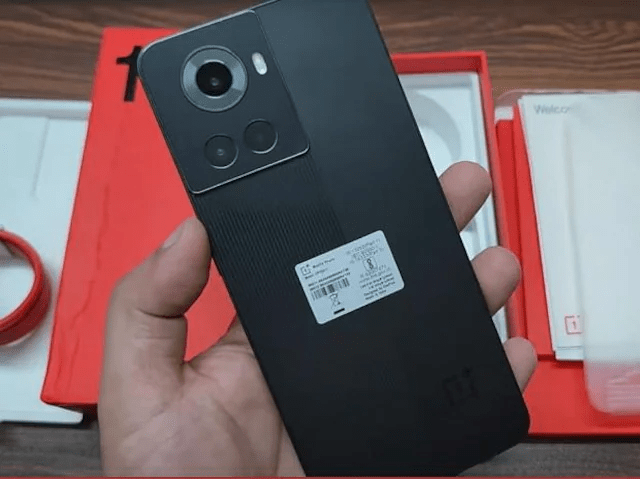
OnePlus 10R 5G review

The Xiaomi 11T Pro is a better smartphone than the OnePlus 10R 5G and Realme GT Neo 3 5G simply because it sets the benchmark that neither phone could beat.

The OnePlus 10R 5G is essentially a rebadged Realme GT Neo 3 5G (review). Both the smartphones have 10-bit AMOLED screen of 120Hz refresh rate, dual stereo speakers, 50-megapixel-based triple-camera set-up on the back, up to 12GB RAM and 256GB on-board storage, and industry-leading 150W fast-charging solution (top-end variant, review unit). While both the smartphones have identical specifications, they are different with regard to design and user interface.

Starting with design, the OnePlus 10R 5G looks heavy, bulky, and thick in comparison to the Realme smartphone. On paper, however, both the smartphones have the same weight and dimensions. The perceptible difference is due to the flat frame and boxy form factor of the OnePlus 10R 5G over the traditional tapered edge design of the Realme GT Neo 3 5G. Design is a subjective thing and users with a liking for minimal would appreciate OnePlus’ subtle design over Realme’s sporty. However, the phone is devoid of classic OnePlus essentials such as alert slider. Not a big omission for someone switching to OnePlus, but existing OnePlus users would find it upsetting.

Coming to user interface, the OnePlus 10R 5G boots Android 12 operating system-based OxygenOS 12.1. Like its previous iterations, the UI is clean and free from bloatware. In comparison, the Realme UI 3.0 interface of the Realme GT Neo 3 5G is full of bloatware. That said, the OnePlus 10R 5G delivers a better experience despite being not much different from Realme — both the UIs are built on OPPO’s ColorOS framework.

Apart from design and interface, the OnePlus 10R 5G is quite similar to the Realme GT Neo 3 5G. It has a 6.7-inch fullHD+ 10-bit AMOLED screen of 120Hz refresh rate. The screen is bright, vivid, and responsive. Together with loud, balanced, and clear dual stereo speakers, the phone delivers a good audio-visual experience.

Imaging is covered by a triple-camera set-up on the back, featuring a 50-megapixel primary sensor (Sony IMX766) with optical image stabilisation (OIS) paired with an 8MP ultra-wide-angle sensor and a 2MP macro lens. On the front, the phone has a 16MP camera sensor. The primary camera is an all-round performer. It takes detailed shots with good colours, modest dynamic range, and decent highlights and shadow details irrespective of lighting conditions.

The ultra-wide-angle camera sensor is mediocre at best. It works fine in daylight conditions but struggles in low-light. Besides, this sensor is not up to the mark with regard to detailing, colour accuracy, and dynamic range. There is nothing to write home about the macro sensor. It lacks autofocus and works with great difficulty even in good light conditions. As for the front camera, it works well for both regular shots and portraits.

Driving the performance is the MediaTek Dimensity 8100-Max system-on-chip, paired with up to 12GB RAM and 256GB on-board storage. Though the chip has a ‘Max’ suffix, it is no different from the regular SoC powering the Realme phone. Nevertheless, the phone delivers consistent performance and top-notch experience. Importantly, there are no thermal issues. The phone keeps cool even when put to power-intensive workloads for extended hours.

As for the on-battery time, the phone’s 4,500 mAh battery is good for a day on regular usage. Charging time is ultra-fast; the battery takes less than 20 minutes to charge 100 per cent from zero through the 150W fast-wired charger that comes with the phone. Unfortunately, there is no support for wireless charging.

Verdict

Priced at Rs 43,999, the OnePlus 10R 5G is expensive than Realme GT Neo 3 5G by Rs 1,000. For the extra money, you get a clean user interface and subtle design. Otherwise, the phone is exactly the same as the Realme smartphone. That said, both the Realme phone and OnePlus smartphones have something in store for everyone. They, however, do not excel on any parameter. The Xiaomi 11T Pro (review) is a better smartphone than the OnePlus 10R 5G and Realme GT Neo 3 5G simply because it sets the benchmark that neither phone could beat.

Google Photos rolls out new filters to show skin in natural shade

At Google I/O, the company released the Monk Skin Tone Scale, an open-source library to help make machine learning of images more inclusive by better interpreting tones and shades

Tech giant Google has added new filters in Google Photos that will help users show their skin in its true shade.

According to 9To5Google, with the Pixel 6 series, the tech giant worked to adjust the phone’s camera to more accurately capture the wide variety of human skin tones, so that people can see their true selves in photographs.

At Google I/O, the company released the Monk Skin Tone Scale, an open-source library to help make machine learning of images more inclusive by better interpreting tones and shades.

ALSO READ: Vivo X80 pro Review

At the time, the company announced that the Monk Scale would soon be put to use within the Google Photos app to offer specialised filters that tweak the skin tones of people in photos users have previously taken.

As shared on Twitter, these new Real Tone filters are rolling out now to Google Photos users on Android, iOS, and the web.

Once the feature is live, users should have a suite of new options in the “Filters” tab of the Google Photos editor, with choices like Playa, Isla, Honey, and Desert.

According to Google, the filters were specially designed to “work well across skin tones”.

If the filter users have selected is one of the new ones, they should see an overlaid mention of “Made with Real Tone”. Each filter should also have adjustments users can make, to deeply refine any given picture.

Design a site like this with WordPress.com
Get started