Get tech news and reviews, gadget news and launches, latest mobile phones, latest smartphones, laptop news, latest cameras, latest tablets, gaming news, internet technology
With an aim to empower teachers and students, tech giant Google on Wednesday announced that it is sharing new updates to Chromebooks, Google Classroom and Google Meet.
With an aim to empower teachers and students, tech giantGoogle on Wednesday announced that it is sharing new updates to Chromebooks, Google Classroom and Google Meet.
For those using the Google Workspace for Education Plus or Teaching and Learning Upgrade, Google said it is adding features focused on increasing interconnectivity, control and efficiency in the classroom to Google Meet.
“Now, Meet calls can be auto-transcribed directly into a Google Doc for easy lesson reviews and the ability to search for keywords and concepts,” Shantanu Sinha, Director, Google for Education, said in a blogpost.
Google said that now users can, with Picture in Picture in Meet, where they can navigate other tabs in Chrome while viewing 4 tiles of students in a Meet call.
And to keep the class engaged and regularly check for understanding, teachers can now add polls and Q&A to Live-streams, and live-stream directly to YouTube.
The company is also adding new features like the Screencast app, built into Chrome OS in M103, where users can record, trim, share and view transcribed screencasts — and create a custom library of videos automatically saved in Google Drive.
“From sharing devices to 1:1, to teachers using Chromebooks alongside students, we’re constantly evolving our features to meet the needs of the classroom,” Sinha said.
Cast moderator is a new mode coming to select devices with Google TV that enables both educators and students to wirelessly share their Chromebook screen to a class display using an access code so that only folks in the same classroom as the display can cast.
Google is also rolling out new integrations and tools to improve teachers’ day-to-day tasks and help students grow their skills.
“Practice sets lean into adaptive learning by giving students instant feedback on their answers and real-time support if they get stuck — providing automated insights for teachers to identify potential gaps in students’ understanding,” Sinha mentioned.
Practice sets are now globally available in beta, and in English only, for Google Workspace for Education customers with Education Plus or Teaching and Learning Upgrade.
Apple Inc on Monday lifted the curtain on its latest processor, the M2. Free software upgrades were also unveiled and will be available in September. Find out about their features
Let us begin with the much-awaited iOS 16. First, the not-so-good-news. Those using iPhone 7 or earlier version will not be able to upgrade to iOS 16.
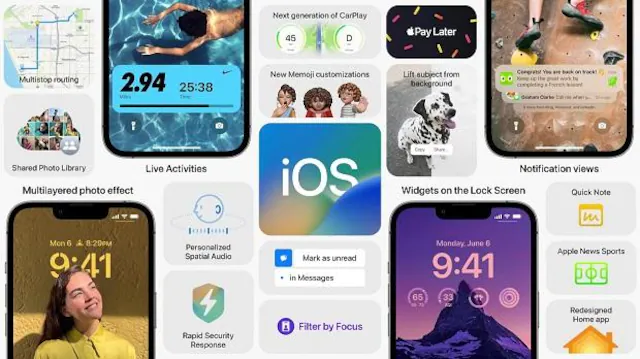
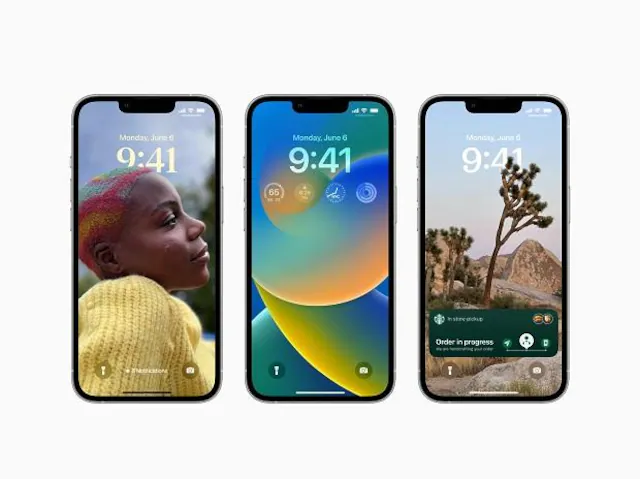
Apple has included a lot of attractive features in the new iOS. Your lock screen will now become trendier. You will be able to see your calendar events, weather and other customizable information without unlocking the device. Android phones had it, and Apple users wanted it too for long. It will support widgets to show information at a glance such as upcoming calendar events, weather, battery levels, alarms, time zones, etc.
The iOS 16 will also allow you to edit and recall sent messages in the Messages app. But you can do it for the first 15 minutes. You will also be able to mark your messages as unread just like the emails.
In addition, SharePlay is coming to messages. Likewise, the Mail app is set to bring new mail experience with features like schedule, recall, remind later, follow up suggestions, and more.
The next version of the operating system for Apple tablets brings new capabilities, especially for M1 chip-powered iPads. It will bring the Stage Manager feature, which will enable desktop-class multitasking with multiple overlapping windows.
Designed for easy collaboration, the iPadOS 16 will debut Apple’s Freeform app for people to brainstorm together on a flexible canvas.
Like iOS 16, the iPadOS 16 will get new tools in the Mail app such as schedule, recall, remind later, follow up suggestions, and more. Safari browser on the iPadOS 16 will get a shared Tab Groups feature, which will allow easy collaboration by enabling web browsing with others.
iPadOS 16 will be available this fall as a free software update for iPad (5th generation and later), iPad mini (5th generation and later), iPad Air (3rd generation and later), and all iPad Pro models.
The watchOS 9 comes with several health and fitness features. It will bring an updated Workout app, with new advanced metrics, views, and training experiences inspired by high-performing athletes.
It comes with a new FDA-cleared ‘AFib History’ feature which allows users to monitor the state of atrial fibrillation over a period of time.
As for the apps, the watchOS 9 will debut the ‘Medications app’, which is touted by the company as a convenient tool for users to discreetly manage, understand, and track medications.
watchOS 9 will be available this fall for Apple Watch Series 4 or later paired with iPhone 8 or later and iPhone SE (second generation) or later, running iOS 16.
The next version of macOS will bring small but meaningful upgrades with regard to continuity. It will debut the ‘Continuity Camera’ feature, which will allow users to use iPhone as the webcam on Mac. Another continuity feature is Handoff, which is coming to FaceTime. It will allow users to start a FaceTime call on their iPhone or iPad and fluidly pass it over to their Mac.
Besides previewing the upcoming platforms, Apple introduced the MacBook Air and upgraded the 13-inch MacBook Pro – both powered by the newly introduced M2 silicon. The new M2 chips are 40% faster than the previous generation
While the Pro model is similar to the last generation model in terms of design, the new MacBook Air M2 brings a redesigned chassis which is 11.3 mm thick and weighs about 1.22g. It features a 13.6-inch liquid retina display, a 1080p FaceTime HD camera, four-speaker sound system, and MagSafe charging. It will be available in India from July in four finishes — silver, space gray, midnight, and starlight.
Staying true to its legacy, Apple continues to innovate and churn out better products every year. The new lot which will hit the markets later this year also looks promising, offering cutting edge technology and a great user experience to all those who can afford it.
Launched in India on June 8, the OPPO K10 5G will be available on Flipkart, OPPO Online Store from June 15
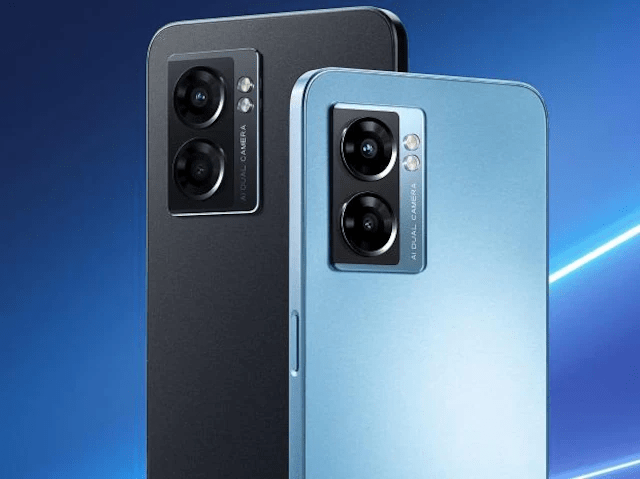
Chinese smartphone maker OPPO on Wednesday launched in India the OPPO K10 5G. Based on the Qualcomm Snapdragon 680 system-on-chip powered 4G model of the same name, the OPPO K10 5G is a new variant with support for 5G powered by MediaTek Dimensity 810 SoC.
Priced at Rs 17,499, the OPPO K10 5G will be available on Flipkart, OPPO Online Store from June 15. In partnership with Flipkart, OPPO is offering up to three months of no-cost equated monthly installment, a flat discount of Rs 1500 on SBI cards and EMI transactions, Axis Bank cards and EMI transactions, Bank of Baroda credit card and credit card EMI transactions, and Kotak Mahindra Bank cards and EMI transactions.
In terms of specifications, the OPPO K10 5G sports a 6.5-inch HD+ IPS LCD screen of 90Hz refresh rate. The smartphone is powered by MediaTek Dimensity 810 5G SoC, paired with 8GB RAM and 128GB onboard storage. Imaging is covered by a dual-camera array on the back — a 48MP primary camera of an f/1.7 aperture and a 2MP depth camera sensor of an f/2.4 aperture. On the front, the phone has an 8MP camera sensor for face unlock mechanism, selfies, video calls, and more.
The device is based on Android 12 operating system-based ColorOS 12.1 interface. It is powered by a 5,000mAh battery, supported by 33W SUPERVOOC fast wired charging. Other features include a side-mounted fingerprint scanner, dual stereo speakers, and up to 5GB dynamic RAM expansion.
Recently, Musk had noted that his electric vehicle company would be reducing its salaried headcount by 10 percent as the company has become overstaffed in some areas.
While tech billionaire Elon Muskrecently said that Tesla would be reducing its salaried headcount by 10 percent, a Goldman Sachs analyst says it can provide the company up to $1 billion in annual operating expenses (OPEX) savings — the company’s day-to-day expenses.
Recently, Musk had noted that his electric vehicle company would be reducing its salaried headcount by 10 percent as the company has become overstaffed in some areas.
This initiative, at least according to Goldman Sachs analyst Mark Delaney, could translate into $0.225-$1 billion in annual OPEX savings, reports Teslarati.
In a message to Tesla employees, Musk noted that while the company is reducing its headcount by about 10 percent, staff working on key projects such as vehicle and battery production, as well as solar installations, would be unaffected by the layoffs. Hourly headcount will also be increasing.
“Tesla will be reducing salaried headcount by 10 percent, as we have become overstaffed in many areas. Note, this does not apply to anyone actually building cars, battery packs, or installing solar. Hourly headcount will increase,” Musk wrote in his email.
In later comments, Musk further clarified that Tesla plans to increase its total headcount over the next 12 months, though the number of paid employees won’t likely change much.
“Total headcount will increase, but salaried should be fairly flat,” Musk wrote.
Delaney weighed in on Musk’s statements. According to the analyst, Musk’s comments suggest that Tesla plans to limit cost growth and not reduce its OPEX at all. This, in turn, should result in some savings for the electric vehicle maker.
“Musk’s comments on Twitter of salaried headcount being fairly flat suggest the company’s plan is to limit cost growth and not reduce OPEX overall,” Delaney said.
“Our base case assumption is for OPEX, including SBC to rise by an average of about $255 million per quarter from 2Q22 through 4Q22, by $1.9 bn in 2022 YoY, and by $2.6 billion in 2023 YoY. Each $100 million of OPEX is about $0.06-$0.08 of EPS,” Delaney added.
At WWDC22, Apple showcased the next generation CarPlay software solution
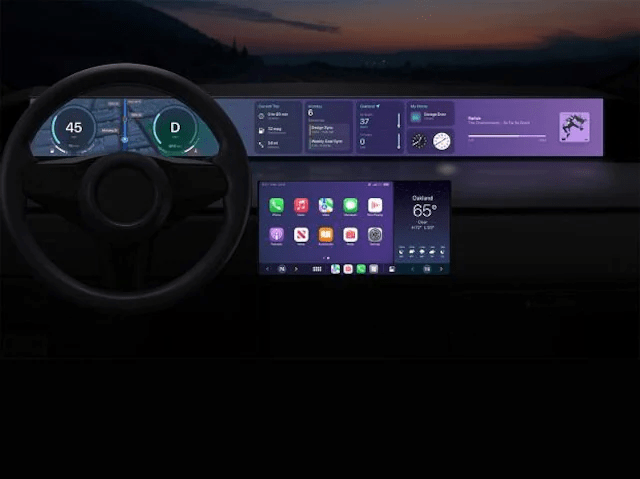
Apple Inc on Monday gave a sneak-peek into the next-generation CarPlay system at the Worldwide Developers Conference event. From an infotainment system, CarPlay is set to mature to an all-round in-car software solution with deep integration with the vehicle itself. That said, CarPlay will be able to provide content for multiple screens within the vehicle, creating an experience that is unified and consistent. Importantly, CarPlay can adapt to different screen sizes and has an all-new interface with support for widgets for services.
CarPlay integration with the vehicle will allow users to do things like controlling the radio or changing the climate directly through CarPlay. Through widgets, it will seamlessly render the speed, fuel level, temperature, and much more information, on the instrument cluster.
Personalisation is another big feature of the next-generation CarPlay. It will allow users to personalise their driving experience by choosing different gauge cluster designs, and with added support for widgets, users will have at-a-glance information from Weather and Music apps right on their car’s dashboard.
For the uninitiated, CarPlay is an in-car infotainment interface supported by the Apple iPhone. In its current form, it overlaps the vehicle’s built-in display with an easy interface that allows users to get directions, make calls, send, and receive messages, and tune-in to favourite music tracks.
The next-gen CarPlay is in the works and Apple will share more information about it in the future. Carmakers such as Ford, Mercedes Benz, Honda Motor, and Jaguar Land Rover could possibly endorse the next-gen CarPlay, but there is no confirmation yet and Apple will announce the list of supported vehicles by late next year.
Moto G82 5G comes in two colour variants and will go on sale from June 14 on Flipkart, Reliance Digital, and leading retail stores
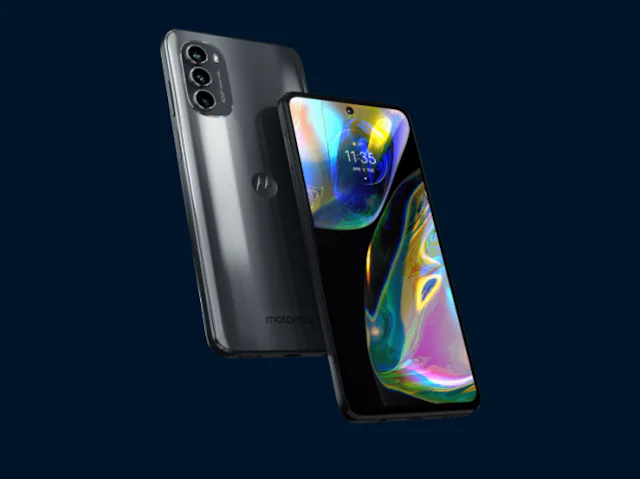
Motorola launched its new mid-range smartphone, the Moto G82 5G, in India on Tuesday.
The smartphone comes with a higher refresh rate, a 50MP camera system with optical image stabilisation (OIS) along with multiple storage options.
The 8MP secondary camera acts as an ultrawide as well as a depth sensor, while the dedicated macro vision lens allows consumers to get 4X closer to their subjects.
Launched at a starting price of Rs 21,499, the Moto G82 5G comes in two colour variants — meteorite gray and white lily. It will go on sale from June 14 on Flipkart, Reliance Digital, and leading retail stores.
The device is available in two variants with 6GB RAM + 128GB storage and 8GB RAM + 128GB storage.
“The moto g82 5G comes with a revolutionary, flagship grade 10-bit display which supports an incredible billion colours, 64 times more than standard 8-bit displays,” the company said in a statement.
It also features a 120Hz pOLED display which is thinner, lighter, more durable and allows for slimmer bezels as compared to traditional AMOLED displays. The best-in-class display also supports DC Dimming, DCI-P3 colour gamut and comes with SGS Blue Eye certification for the most incredible viewing experience in the segment.
Moto G82 5G comes with stereo speakers, tuned with Dolby Atmos for an enhanced multidimensional sound experience and is packed with a massive 5000mAh battery with a 33W TurboPower charger.
The Moto G82 also delivers the best connectivity features in segment with support for 13 5G Bands, 3 Carrier Aggregation, 4X4 MIMO, and more.
Powered by the Qualcomm Snapdragon 695 5G, the handset enables best-in-class gaming, content creation and multitasking.
The Moto G82 is also one of the few phones to offer an IP52 rated dust and water repellant design while being the slimmest and lightest in its segment.
Previewed at the Apple’s annual WWDC, the iOS 16 will bring personalised lock screen, shared iCloud library for family sharing, new functionalities to Messages app, improved Mail app, and much more
Later this year, the iOS 16 will bring several new features to the iPhone 8 and above. Previewed at the Apple’s annual worldwide developers conference (WWDC), the iOS 16 will bring personalised lock screen, shared iCloud library for family sharing, new functionalities to Messages app, improved Mail app, and much more. Here is what is new in the Apple’s upcoming operating system for iPhones.
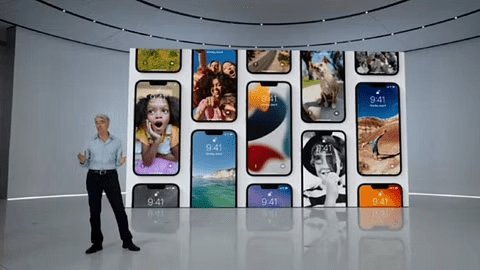
iOS 16 will bring a personalised lock screen with multi-layered effect, widgets, wallpapers, live activities, and notifications. Starting with multi-layered effect, it will allow users to use photos as wallpaper with subject of photos set in front of the time on the lock screen, creating a sense of depth. With widgets enabled, the lock screen on the iOS 16 will show more information at a glance such as upcoming calendar events, weather, battery levels, alarms, time zones, etc. Besides photos, the iOS 16 will have a gallery based on Apple collections for use as live wallpapers such as weather wallpaper to see live weather conditions as they change throughout the day; and an astronomy wallpaper for views of the Earth, moon, and the solar system. The live activities feature of the lock screen is designed to help users stay on top of things that are happening in real time, such as a sports game, workout, ride-share, or food delivery order.
Besides personalised lock screen experience, the iOS 16 will introduce a common library for family photos with ‘iCloud Shared Photo Library’. It is a separate library on the iCloud wherein up to six users can choose to share existing photos from their personal libraries.
Updates are coming to Apple Messages with the iOS 16. With the new OS, users will be able to edit or recall recently sent messages, recover recently deleted messages, and mark conversations as unread so they can come back to them later. In addition, SharePlay is coming to Messages. Unveiled with Apple iOS 15, SharePlay allows users to share movies and songs with others through FaceTime. With iOS 16, the functionality is being extended to Messages, making it possible for users to enjoy synced content like movies or songs and shared playback controls all while chatting.
The iOS 16 is also set to bring new mail experience with features like schedule, recall, remind later, follow up suggestions, and more. Besides, the mail app on the iOS 16 will bring the biggest overhaul to search with more relevant, accurate, and complete results.
Live Text is another iOS 15 feature that is set to get enhanced capabilities in iOS 16. In the next version of iPhone OS, the Live Text feature is expanding to include video. Users can pause a video on any frame and interact with text on-screen. Besides, the Live Text will get ‘Visual Look Up’ feature, which would allow users to tap and hold on the subject of an image to lift it from the background and place it in apps like Messages. Visual Look Up feature will work with human subjects, and also expands to recognise birds, insects, and statues.
Aside to the above-mentioned features, there are utility features such as Apple Pay Later and Order Tracking. However, these features are restricted to select countries where Apple Pay is accepted online or in-app, using the Mastercard network. Likewise, the iOS 16 will introduce new CarPlay feature. However, Apple did not detail if it will be available across countries.
The Apple WWDC 2022 will start with a keynote address on June 6 at 10:30 pm (IST)
Apple’s annual developers conference, officially called worldwide developers conference (WWDC), is set to kick off with a keynote address on Monday at 10:30 pm (IST). The keynote is of interest because it is the event where the American technology giant makes announcements related to its products, software, and services. Besides, the company details the changes coming to its operating system for iPhone, iPad, Watch, TV, Mac, and more.
Apple WWDC 2022 Keynote address: How to watch livestream
The Apple WWDC 2022 will start with a keynote address on June 6 at 10:30 pm (IST). The keynote address will stream directly from Apple Park on Apple website, the Apple Developer app, the Apple Developer website, the Apple TV app, and YouTube. It will also be available for on-demand playback after the conclusion of the stream.
To watch the keynote event live, download the Apple Developer app, available on Mac, iPhone, iPad, and Apple TV. Alternatively, you can watch the event livestream through the video embedded at the end.
iOS 16: The next iteration of iPhone operating system is rumoured to bring a revamped notification center, always-on display, new health features, and social features for iMessage service.
iPadOS 16: The next version of operating system for Apple big screen slates is rumoured to bring the experience close to its laptops (Macbooks) and less like iPhones. The iPadOS 16 is expected to roll out with new multitasking features, include resizable windows for a more PC-like experience.
MacOS: Rumoured to be called Mac Mammoth, the next iteration of operating system for Mac computers and laptops is expected to get apps update in-line with what’s new coming to iPhones with iOS 16.
realityOS: It could be the big wild card announcement at WWDC. The OS for Apple mixed reality headset, which is expected to debut as early as first half of next year, is expected to get a mention in WWDC this year.
Macbooks with M2 chip: Apple is expected to unveil its M1 chip successor, which is rumoured to debut in the newly designed Macbook Air and Macbook Pro. While details are scarce, the chip is rumoured to have 8-core CPU and 10-core GPU.
Users can make four equal payments with no interest or fees on Apple Pay Later.
Apple Inc on Monday rolled out upgrades to the operating systems for its iPhones and iPads, while analysts and developers are keenly awaiting any hints about how a future mixed-reality headset might work.
Apple announced at its annual software developer conference that users can buy now and pay later for purchases. Apple Pay Later will be available anywhere that Apple Pay is accepted and managed through the Apple Wallet. Users can make four equal payments with no interest or fees.
Apple also added an edit button to iMessage for sent messages, beating Twitter to a long-requested feature. While a headset announcement is unlikely on Monday, developers expect the future headset to likely to use cameras to pass a view of the outside world into a high-resolution display that can overlay digital objects on physical surroundings and could arrive in March of next year, said Anshel Sag, principal analyst at Moor Insights & Strategy. Such a device would be Apple’s first entry into a new category of computing device since the Apple Watch shipped in 2015 and would put it in direct competition with Meta, which has disclosed plans for a mixed-reality headset code named “Cambria” to be released this year.
But neither Sag nor other developers and analysts interviewed by Reuters expect a sneak peek at the headset on Monday. Instead, they will be looking for buried hints about the future device such as improvements in how Apple’s devices process augmented reality scenes. They will be on the lookout for small surprises in so-called “spatial” features in which devices understand how they are being used in three-dimensional space, said Andrew McHugh, who co-founded an app called Vivid that lets users virtually step inside their videos and photos.
Apple has previously rolled out features such as spatial audio for its wireless headphones, where sounds change as users turn their heads.
Apple might announce an updated version of its Mac Pro computer, which is aimed at users such as developers who need a lot of computing power and is the last machine in Apple’s lineup to use a central processor from Intel Corp. That machine would likely feature a powerful processor made up of multiple Apple Silicon chips fused together with advanced packaging technology, said Ben Bajarin, head of consumer technologies at Creative Strategies.
The Apple Store was offline on Monday morning, a move that in the past has been followed by new products being added to the site. Analysts expect some of the day’s biggest takeaways to be updates to core products like the iPad. Bloomberg reported that Apple plans to overhaul the device’s operating system to make it better for working with multiple apps and a keyboard. Such a move would reflect the fact that higher-end iPads have processor chips that are as powerful as Apple’s Mac computers, but also features that those Mac computers do not have, such as touch screens and cellular data connections.
“For years, Apple pointed to the iPad as the computer for everyone. Now it feels increasingly like the Mac is the computer for everyone. If that’s the case, where do you take the iPad?” said Tom Mainelli, group president for consumer and device research at IDC.
Mac sales grew 23% to $35.2 billion the Apple’s most recent fiscal year, powered by a combination of increased purchases of laptops for working from home and its introduction of its own line of Apple Silicon chips to power the machines. Bajarin said Apple might roll out new features designed to make Macs easier to use in corporate environments in a bid to takeaway market share from PC makers who rely on Microsoft Corp’s Windows operating system.
“I do think we’re on the cusp of an outbreak of Macs in enterprise,” Bajarin said.
A year after releasing IT Rules 2021, the govt proposed a clutch of changes in it. While we await the revised version, find out what the original draft proposed and its impact on social media giants
The release of a draft proposal — seeking public comments on some amendments to Information Technology (Intermediary Guidelines and Digital Media Ethics Code) Rules, 2021– and its hasty withdrawal has offered some glimpse into the government plans vis-à-vissocial media platforms.
The Ministry of Electronics and Information Technology or MeitY had come out with the new IT rules last year –which came into effect from 26th May, 2021. The rules put in place a framework for content regulation by online publishers of news and current affairs content, and curated audio-visual content. The aim of the 2021 rules was to make social media and internet companies — having more than five million users– more accountable for the content on their platforms.
The 2021 rules had mandated that social media intermediaries publish rules to curb posting and sharing of content which is inflammatory, objectionable, hateful, racially and ethnically objectionable etc. The online intermediaries were also told to appoint a nodal officer in India who is available round-the-clock to help law enforcement agencies. Through the rules, the government had prescribed a three-tier grievance redressal mechanism.
But, so far, if any user was not satisfied with any social media platform’s grievance redressal system, he had only one option, and that was to approach court.
On June 1, the draft that MeitY had put on its website proposed setting up of government panels to address such grievances. The draft was taken back the next day for some changes.
So, before the government amends the proposed amendments to the IT rules and comes out with a new version, let us see what all it had proposed.
One of the key proposals of the draft was that the government would establish one or more Grievance Appellate Committees, which would be made up of a chairperson and other members appointed by the government. Under this amendment, a user would be able to appeal a grievance officer’s order in front of the committee within 30 days of receiving it from the former.
For its part, the committee would have to endeavour to resolve the appeal within 30 days of receiving it. And, the concerned intermediary would have to comply with every order passed by the Grievance Appellate Committee. The 2021 rules did not have a provision for such a Grievance Appellate Committee.
Pavan Duggal, Cyberlaw Authority and Advocate, Supreme Court of India says Grievance Appellate Committee proposal is a step in the right direction. It adds another level that will reduce the quantum of social media litigation, he says adding that any additional compliance will be seen as onerous. But, we need to strike a golden balance between the rights of users and intermediaries, says Dugga.
The draft said that an intermediary would have to acknowledge a user complaint received by its grievance officer within 24 hours. This would specifically apply when the complaint in question is about user or account suspension, removal, and blocking.
Also, if the complaint is for the removal of information or links that infringe copyrights, are pornographic, or are defamatory, among other things. The concerned intermediary would have to respond to requests for removal within 72 hours. However, the draft also said that the platforms were allowed to set up safeguards against the misuse of such provisions.
Under the 2021 Rules, an intermediary has to acknowledge a complaint sent to the grievance officer within 24 hours and dispose of it within a period of 15 days from the date of receipt.
Duggal continues, proposed reduced timelines for grievance redressal need to be even shorter. Moreover, shorter timelines justified as intermediaries earning from data of Indians in absence of data protection law, he says. SC has held that intermediaries cannot be judges.
Under the 2021 rules, big social media platforms, such as Facebook and Twitter, were also mandated to enable the identification of the ‘first originator’ of any information that undermines the sovereignty of India, security of the state, or public order.
It is clear that some changes to the country’s technology and social media regulations are in the offing, even if we don’t know their exact contours at the moment. This will have a significant impact on social media giants, for whom India is a key market, which has not saturated yet and has upside potential left to it. According to statista, more than 50 per cent of India’s population was accessing social networks in 2020. By 2025, it is estimated that social network penetration would be 67 per cent of the country’s population.
As of February 2021, affordable data and mobile phones, along with the government’s Digital India initiative, have resulted in India’s digital population reaching approximately 624 million active users. According to statista, India is the world’s second-largest internet market at this stage.
However, even with the overhang of possibly onerous regulations, India is a market social media and tech giants cannot afford to ignore, and that’s not just because of its size, but also because of the revenue it generates.
As domestic media companies have lost ground and revenue, Google and Facebook have emerged as the main beneficiaries of India’s booming internet advertising market. According to a media report, recently, the combined ad revenues of Google and Facebook came out to be higher than the combined ad revenues of the top 10 listed traditional media companies.
However, one major concern, which is whether or not the now-withdrawn draft proposals, or the ones that will come out soon, will lead to enhanced government censorship needs to be addressed.




 Techno World