Get tech news and reviews, gadget news and launches, latest mobile phones, latest smartphones, laptop news, latest cameras, latest tablets, gaming news, internet technology
Tech giant Amazon is shutting down support for its Cloud Cam security camera and offering owners a free Blink Mini to replace it.
Tech giant Amazon is shutting down support for its Cloud Cam security camera and offering owners a free Blink Mini to replace it.
Cloud Cam owners will be able to use their cameras and download video until December 2 of this year, after which all recordings will be deleted and the hardware will no longer function, reports The Verge, which has obtained a copy of an email sent to customers announcing the change.
Customers with the Cloud Cam Key Edition will also lose the ability to connect to smart locks, although they can get a free fourth-generation Echo to replace the functionality.
“As the number of Alexa smart home devices continues to grow, we are focusing efforts on Ring, Blink, and other technologies that make your home smarter and simplify your everyday routines. Therefore, we have decided to no longer continue support for Amazon Cloud Cam and its companion apps,” Amazon said in its email, which was also posted on Reddit.
In a statement to MacRumors, Amazon added “we will continue to offer innovative smart home security solutions for our customers through Amazon’s Ring and Blink brands”. It also specified that it will give Blink Mini cameras to users who are “still actively using their Cloud Cam”.
Amazon smart home spokesperson Jocelyn Shaw clarified to The Verge that Cloud Cam customers who have been active in the past six months will be eligible for replacement of hardware, and customers will get one Blink Mini for each active Cloud Cam they were using, or one Blink Mini and Echo for each Cloud Cam Key Edition.
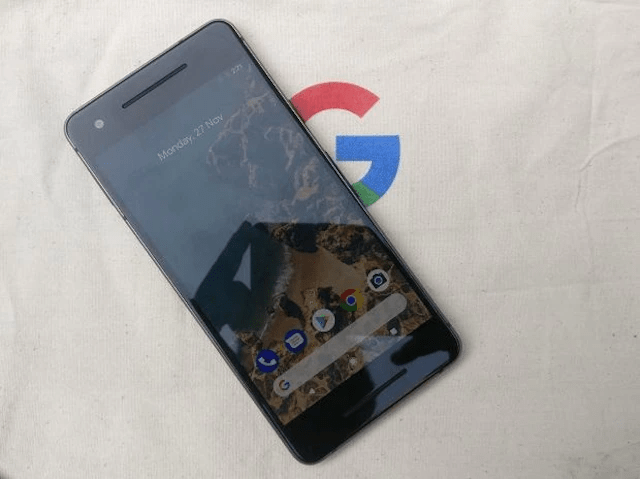
An alleged prototype of Google’s upcoming Pixel 7 smartphone has been offered on eBay, giving the audience a sneak peek at the device months before its official release.
An alleged prototype of Google’s upcoming Pixel 7 smartphone has been offered on eBay, giving the audience a sneak peek at the device months before its official release.
According to The Verge, the tech giant just revealed the phone a few weeks ago at Google I/O, and the prototype matches up with what the company has already shown.
The distinctive camera bar is back, and this year it is an aluminium bar with cutouts for the cameras. And the alleged prototype’s casing is a deep black that looks just like one of the colours Google showed off at I/O.
The eBay listing includes a few photos of the front, back, and sides of the device, though there is not much to see that users cannot already spot on Google’s official renders.
A photo of the phone turned on shows it has 128GB of storage, which suggests Google will once again be offering a 128GB model as an option for the final phone.
A screenshot showed that the smartphone’s model is GVU6C, the report said.
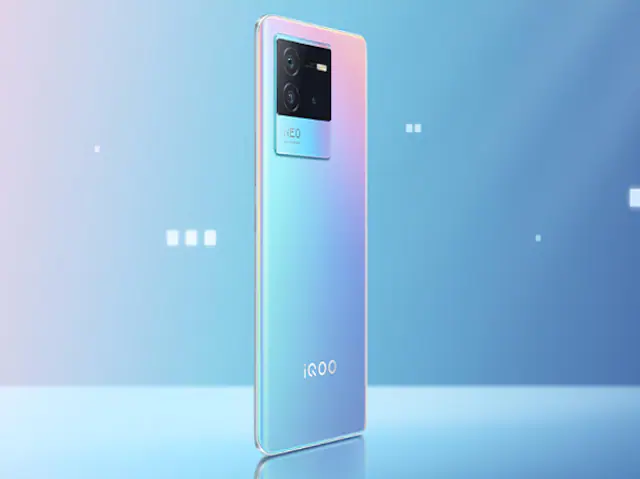
IQOO Neo6 5G was launch in India today and the smartphone is priced at Rs 29,999 onwards with mid-range specs and Qualcomm Snapdragon 870 system-on-chip
Chinese smartphone maker IQOO on Tuesday launched in India the IQOO Neo 6 5G. Priced Rs 29,999 onwards, the mid-range smartphone is powered by Qualcomm Snapdragon 870 system-on-chip. It boasts a 64-megapixel-based triple camera system, 80W flash charge fast wired charging tech, and X-axis linear vibration motor for haptics.
Commenting on the IQOO Neo 6 5G launch, Nipun Marya, Chief Executive Officer – iQOO, said, “At iQOO, our focus is to create high-performance smartphones that give our users the ultimate flagship-level experience. We are thrilled to introduce the all-new Neo series in India with the launch of Neo 6. Our first smartphone from the Neo series is a power-packed offering with segment-leading performance, gaming capabilities with a refreshing design and a capable camera. It is a delight for young, tech-savvy consumers looking for a high-performance package at a competitive price. We intend to bring the right product to the right set of consumers while also delivering cutting-edge technological innovation, excellent gaming experience and better camera features.”
Priced at Rs 29,999 for 8GB+128GB and Rs 33,999 for the 12GB+256GB variant, the iQOO Neo 6 will be available from May 31 on Amazon and iQOO e-store in Dark Nova and Cyber Rage colours. According to IQOO, the phone will receive two years of android and three years of monthly security updates.
The iQOO Neo 6 is powered by Qualcomm Snapdragon 870 5G Mobile Platform. It sports a 120Hz E4 AMOLED display with HDR10+ certification. Other specifications include a large Cascade Cooling System, 1200Hz Instant Touch Sampling Rate, and 4D Game Vibration with X-Axis Linear vibration motor. the iQOO Neo 6 comes packed with 80W FlashCharge technology for the 4700mAh battery, which is touted by the company to charge up to 50 percent of its capacity in 12 minutes through supplied charger.
American tech giant Apple’s upcoming iPhone 14 Pro and Pro Max smartphone might finally get the always-on display feature.
American tech giant Apple’s upcoming iPhone 14 Pro and Pro Max smartphone might finally get the always-on display feature.
According to The Verge, a report states that Apple could introduce the feature with iOS 16, allowing the iPhone to display a limited amount of information even when it’s locked.
The report says the always-on mode for the iPhones might function similarly to the way it does with the Apple Watch Series 5 and above. iPhone 14 Pro and Pro Max will drop the lock screen’s frame rate with always-on mode enabled, letting them conserve energy while the display remains powered on.
It’s unclear if the new iPhone will use the same low-temperature polycrystalline oxide (LTPO) display Apple uses in newer Watch models. These low-powered screens play a huge part in getting always-on mode to work properly, as they’re built to keep devices from consuming too much power, reported the outlet.
Analysts had predicted last year that the iPhone 13 would come with an LTPO display to enable always-on display. The always-on feature has for many years been supported by several Android devices.
For example, on certain Samsung devices, the always-on display can show the time, battery level, widgets, and more, all while the phone stays locked.
As per The Verge, it’s expected that iOS 16 will come with similar functionalities, including wallpapers with widget-like capabilities.
According to 9to5Google, the tool will help Google Assistant get “better at recognising your frequent words and names”
Google Assistant will soon recognise your voice as the company is working on a personalised speech recognition feature.
According to 9to5Google, the tool will help Google Assistant get “better at recognising your frequent words and names.”
The “Personalised speech recognition” feature will appear in Google Assistant settings.
The feature description reads: “Store audio recordings on this device to help Google Assistant get better at recognising what you say. Audio stays on this device and can be deleted any time by turning off personalised speech recognition”.
The upcoming feature looks to expand AT and ML-based improvements beyond “Hey Google” to your actual Assistant commands, “especially those with names (using your voice to message contacts) and frequently spoken words”.
It’s still not clear when this capability will launch.
The feature will allow more advanced recognition of commands and contact names.
Owing to privacy concerns, Google will give users an option in settings to opt out of the personalised speech recognition if they don’t want their voice to be stored.
The virtual assistant software application can now also warn users when they need to change their password, and can even help them change it.
The company had said the new experience would roll out gradually, but it is only about now that more than a handful of users have started to get it on their devices.
The Xiaomi 11T Pro is a better smartphone than the OnePlus 10R 5G and Realme GT Neo 3 5G simply because it sets the benchmark that neither phone could beat.
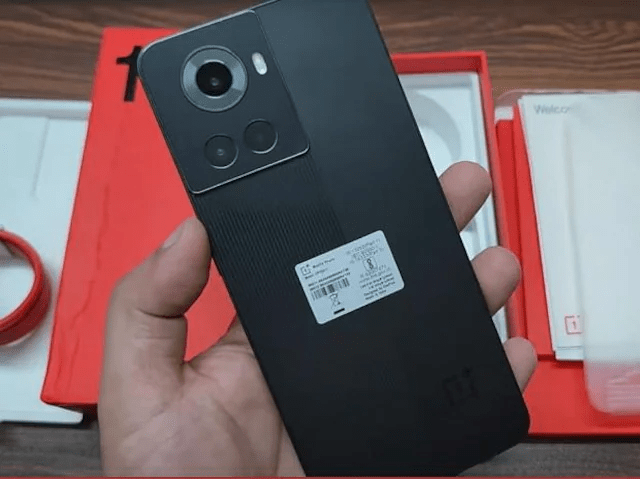
The OnePlus 10R 5G is essentially a rebadged Realme GT Neo 3 5G (review). Both the smartphones have 10-bit AMOLED screen of 120Hz refresh rate, dual stereo speakers, 50-megapixel-based triple-camera set-up on the back, up to 12GB RAM and 256GB on-board storage, and industry-leading 150W fast-charging solution (top-end variant, review unit). While both the smartphones have identical specifications, they are different with regard to design and user interface.
Starting with design, the OnePlus 10R 5G looks heavy, bulky, and thick in comparison to the Realme smartphone. On paper, however, both the smartphones have the same weight and dimensions. The perceptible difference is due to the flat frame and boxy form factor of the OnePlus 10R 5G over the traditional tapered edge design of the Realme GT Neo 3 5G. Design is a subjective thing and users with a liking for minimal would appreciate OnePlus’ subtle design over Realme’s sporty. However, the phone is devoid of classic OnePlus essentials such as alert slider. Not a big omission for someone switching to OnePlus, but existing OnePlus users would find it upsetting.
Coming to user interface, the OnePlus 10R 5G boots Android 12 operating system-based OxygenOS 12.1. Like its previous iterations, the UI is clean and free from bloatware. In comparison, the Realme UI 3.0 interface of the Realme GT Neo 3 5G is full of bloatware. That said, the OnePlus 10R 5G delivers a better experience despite being not much different from Realme — both the UIs are built on OPPO’s ColorOS framework.
Apart from design and interface, the OnePlus 10R 5G is quite similar to the Realme GT Neo 3 5G. It has a 6.7-inch fullHD+ 10-bit AMOLED screen of 120Hz refresh rate. The screen is bright, vivid, and responsive. Together with loud, balanced, and clear dual stereo speakers, the phone delivers a good audio-visual experience.
Imaging is covered by a triple-camera set-up on the back, featuring a 50-megapixel primary sensor (Sony IMX766) with optical image stabilisation (OIS) paired with an 8MP ultra-wide-angle sensor and a 2MP macro lens. On the front, the phone has a 16MP camera sensor. The primary camera is an all-round performer. It takes detailed shots with good colours, modest dynamic range, and decent highlights and shadow details irrespective of lighting conditions.
The ultra-wide-angle camera sensor is mediocre at best. It works fine in daylight conditions but struggles in low-light. Besides, this sensor is not up to the mark with regard to detailing, colour accuracy, and dynamic range. There is nothing to write home about the macro sensor. It lacks autofocus and works with great difficulty even in good light conditions. As for the front camera, it works well for both regular shots and portraits.
Driving the performance is the MediaTek Dimensity 8100-Max system-on-chip, paired with up to 12GB RAM and 256GB on-board storage. Though the chip has a ‘Max’ suffix, it is no different from the regular SoC powering the Realme phone. Nevertheless, the phone delivers consistent performance and top-notch experience. Importantly, there are no thermal issues. The phone keeps cool even when put to power-intensive workloads for extended hours.
As for the on-battery time, the phone’s 4,500 mAh battery is good for a day on regular usage. Charging time is ultra-fast; the battery takes less than 20 minutes to charge 100 per cent from zero through the 150W fast-wired charger that comes with the phone. Unfortunately, there is no support for wireless charging.
Verdict
Priced at Rs 43,999, the OnePlus 10R 5G is expensive than Realme GT Neo 3 5G by Rs 1,000. For the extra money, you get a clean user interface and subtle design. Otherwise, the phone is exactly the same as the Realme smartphone. That said, both the Realme phone and OnePlus smartphones have something in store for everyone. They, however, do not excel on any parameter. The Xiaomi 11T Pro (review) is a better smartphone than the OnePlus 10R 5G and Realme GT Neo 3 5G simply because it sets the benchmark that neither phone could beat.
At Google I/O, the company released the Monk Skin Tone Scale, an open-source library to help make machine learning of images more inclusive by better interpreting tones and shades
Tech giant Google has added new filters in Google Photos that will help users show their skin in its true shade.
According to 9To5Google, with the Pixel 6 series, the tech giant worked to adjust the phone’s camera to more accurately capture the wide variety of human skin tones, so that people can see their true selves in photographs.
At Google I/O, the company released the Monk Skin Tone Scale, an open-source library to help make machine learning of images more inclusive by better interpreting tones and shades.
At the time, the company announced that the Monk Scale would soon be put to use within the Google Photos app to offer specialised filters that tweak the skin tones of people in photos users have previously taken.
As shared on Twitter, these new Real Tone filters are rolling out now to Google Photos users on Android, iOS, and the web.
Once the feature is live, users should have a suite of new options in the “Filters” tab of the Google Photos editor, with choices like Playa, Isla, Honey, and Desert.
According to Google, the filters were specially designed to “work well across skin tones”.
If the filter users have selected is one of the new ones, they should see an overlaid mention of “Made with Real Tone”. Each filter should also have adjustments users can make, to deeply refine any given picture.
The Vivo X80 Pro, although not a pro, comes equipped with great camera and features, but is still not in the premium category
What we understand by pro has become so convoluted in tech jargon that everything has just become pro. Any flagship comes with a pro suffix attached, whether it justifies the features or not. And, over the last five or so years, it has become one of the most overused terms. Vivo, like many others, does not do justice to the pro name with its new iteration the X80 pro. The phone does come equipped with more feature than its other categories, but it does not justify the pro tag. But then what you and I understand as pro, can be very subjective.
Design
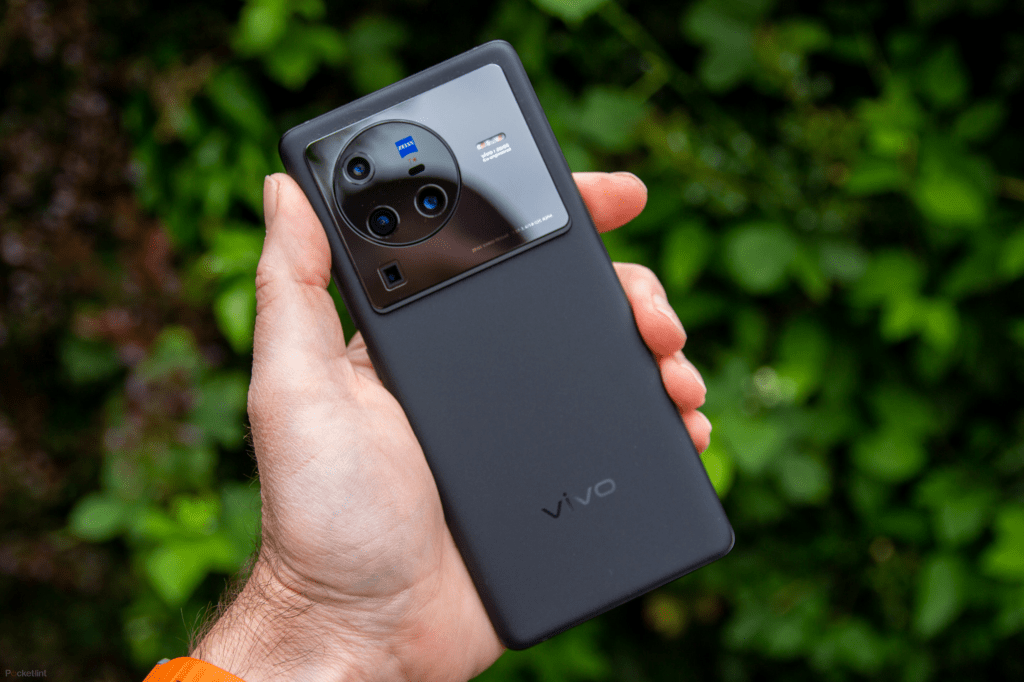
The first thing which will attract a person towards this device is the camera bump. Occupying nearly a third of the space, the phone has a distinct look to it. The feel of the back panel is good, and the back cover with its textured finish gives it a premium look. Though a bit wobbly, the phone doesn’t skid on surfaces. The volume and power buttons on the side are just about right for easy access and the front has a hole-punch camera. Ergonomically, though, there are problems. The phone weighs too much and isn’t as well balanced as you would like to be.
This is where Vivo has really outdone itself. With peak brightness at 1,500 nits, Vivo doesn’t disappoint. The 6.8-inch screen offers excellent viewing angles and perfect blacks. Even in the sun, the screen performs well. And, in low light modes, it shines. For movie watching, Vivo would have been ideal, had it not been for its weight. The refresh rate, though 120Hz, was not as smooth as you would expect in a Samsung. The curve edges are also something I am not a big fan of.
The bezels are barely noticeable and like with most phones the hole-punch camera becomes invisible after a while. One problem, which has been very common across platforms, was the night light feature. Even with warm temperatures, it was very luminescent for my comfort.
Camera
Another area where Vivo has done exceedingly well is the camera setup. With high pixel density lenses at the back and the 32-MP lens at the front, the camera setup is one of the best in the category. The telephoto lens worked well and there were hardly any issues with pixelations. Vivo provides a few standard beautification modes, which when switched off provide a vivid and clear picture. The colours are as close to likeness as possible and with Zeiss mode on, the phone performs even better with clearer colours. The video recording feature is still not as good as others in the category. The cinematic mode offered more, but still fell short of expectation.
Battery life
The 4700mAh battery provided enough juice for the phone to survive over 14 hours even with medium to heavy use and GPS, but it was not a two-day battery life one would expect. With light and medium use the battery can run 18 hours, but that would be too much of a stretch. But the battery drain was not as bad as other Snapdragon 8 Gen 1 processors.
Performance and UX
Vivo has been able to solve the heating issues related with the Snapdragon chips to a certain extent. The phone does start heating up after 45 minutes of gameplay. Regular functions, though, did not subject it to heating issues. Performance wise, the phone was not up to the mark. The bloatware was a big problem. Despite the 12 GB RAM and extra clocking speed, the phone did not perform well at its peak. The OS is complicated and not an easy one to navigate. Vivo needs better OS at top of the line up.
Price
Imagine purchasing a Rs 80,000 phone and spending a day deleting all the apps you do not need and then having to deal with too much of native apps. When a person is paying that much, they would like a clean interface and that is what Vivo has not been able to provide. To break the premium market, it would need a strong key differentiator.
Digilocker is a new addition to the services available through MyGov HelpDesk chatbot on WhatsApp and you can use it to access CoWin services like vaccine appointment, vaccination certificate etc. too
Digilocker services are now available on WhatsApp through MyGov Helpdesk chatbot. For the uninitiated, Digilocker is a smartphone app developed by the Ministry of Electronics & IT (MeitY) with an aim to provide access to authentic documents in digital form to the citizens. The issued documents on the Digilocker platform are deemed to be at par with original physical documents as per Rule 9A of the Information Technology (Preservation and Retention of Information by Intermediaries providing Digital Locker facilities) Rules, 2016 notified on February 8, 2017.
“Offering Digilocker services on the MyGov Helpdesk is a natural progression and a step towards providing citizens with simplified access to essential services via WhatsApp’s easy and accessible platform. With almost 100 million plus people already registered on Digilocker and 5 billion plus documents issued till date, we are confident that the service on WhatsApp will digitally empower millions by helping them access authentic documents and information, right from within their phones,” MyGov CEO, Abhishek Singh, said.
Here is how-to access Digilocker services via MyGov Helpdesk chatbot on WhatsApp:
Step 1: Save ‘+91-9013151515’ as a MyGov HelpDesk contact number in the phone directory
Step 2: Open WhatsApp and refresh list of contacts
Step 3: Tap on MyGov HelpDesk to open the chat window
Step 4: Type ‘Namaste’, ‘Hi’ or ‘Digilocker’ to activate the chatbot
Step 5: The chatbot shows available options. Tap on the ‘Digilocker Services’ here
Step 6: Tap on ‘Yes’ option when the chatbot asks if you have Digilocker account
Step 7: Enter 12-digit Aadhaar number when the chatbot asks for it. It is required to link and authenticate your Digilocker account for access to its services via WhatsApp
Step 8: Enter the OTP to proceed
Step 9: Once the OTP is confirmed, the chatbot lists all the documents linked with your Digilocker account.However, you can download only one document at a time. To download, type and send the number the document is listed at
Step 10: Tap on other documents to go back to the list of available documents
Digilocker is a new addition to the services available through MyGov HelpDesk chatbot on WhatsApp. You can also access CoWin services such as vaccine certificates through the same chatbot. To do so, follow the following steps:
Step 1: Open WhatsApp and say “Hi” on the MyGov HelpDesk chatbot
Step 2: Tap on CoWin Services from the options
Step 3: The bot displays list of available services. Currently, the vaccine related services such as appointment, certificate, etc. are listed as option 2. Type ‘2’ and send
Step 4: To download vaccine certificate, type ‘2’ and send
Step 5: Authenticate through OTP details
Step 6: Once you enter the OTP, the bot displays the names of individuals registered on the CoWIN website with the number
Step 7: Type the number the user is listed at and send to download certificate. The bot will then send the vaccine certificate on WhatsApp in a PDF format.
The only thing the Vivo TWS 2 ANC have going for them is the battery life and nothing else. Sound signatures are disappointing
There has been a flood of wireless earphones in the market. All the major brands have been launching their earbuds and making a foray into the space. Although Vivo had introduced their buds two years ago, they have recently launched a new iteration with ANC feature. The TWS 2 ANC are not the only ones with active noise cancellation, they are tracking to create a niche in the market, which has few players.
The company has kept to the design, with a few changes. The Apple-like plasticky-end has given way for buds which are replaceable and more customisable. The feature does help with better fit, but the buds are still bulky in design and too visible for my taste. The box has the same curvy edges. Although one would have liked to see a sleeker design, even at this size it does not seem too much of a burden. The plastic feel is better than competitors certainly.
Sound
Given the price range, the Vivo buds are a disappointment in this category. The sound signatures were poor across when compared to others. The volume levels were low. At highs, there is a lot of throttling, and the lows are not audible at all. I could not hear the starting of Kygo’s “Firestone”. The bass was very low. In mid-frequencies, the earphones performed better. The ANC did create a vacuum but did not work as well as you would expect the ANC to work. There was a lot of pass-through. The mic’s weren’t as good either, as there was a lot of ambient noise that they captured.
Connectivity and battery
The Bluetooth range is not an issue, but even with Vivo phones there was a lag in connectivity. The earphones would falter often, not connecting to the phone immediately. The earphones would work well for 4-5 hours, but wearability is an issue. The company promises over a day’s battery life, but the actual situation may be much lower.
Price
At Rs 5,999, Vivo TWC ANC 2 are a tad bit expensive for what they bring to the table. Vivo is still far from perfection when it comes to developing the perfect buds.








 Techno World