Apple announces option to buy now and pay later, edit button for messages

Users can make four equal payments with no interest or fees on Apple Pay Later.
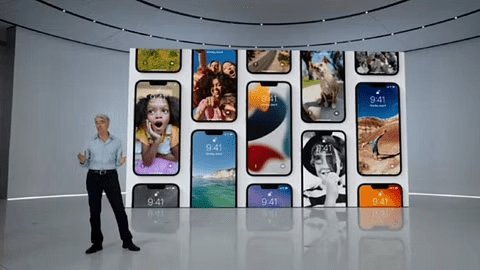
Apple Inc on Monday rolled out upgrades to the operating systems for its iPhones and iPads, while analysts and developers are keenly awaiting any hints about how a future mixed-reality headset might work.

Apple announced at its annual software developer conference that users can buy now and pay later for purchases. Apple Pay Later will be available anywhere that Apple Pay is accepted and managed through the Apple Wallet. Users can make four equal payments with no interest or fees.

Apple also added an edit button to iMessage for sent messages, beating Twitter to a long-requested feature. While a headset announcement is unlikely on Monday, developers expect the future headset to likely to use cameras to pass a view of the outside world into a high-resolution display that can overlay digital objects on physical surroundings and could arrive in March of next year, said Anshel Sag, principal analyst at Moor Insights & Strategy. Such a device would be Apple’s first entry into a new category of computing device since the Apple Watch shipped in 2015 and would put it in direct competition with Meta, which has disclosed plans for a mixed-reality headset code named “Cambria” to be released this year.

But neither Sag nor other developers and analysts interviewed by Reuters expect a sneak peek at the headset on Monday. Instead, they will be looking for buried hints about the future device such as improvements in how Apple’s devices process augmented reality scenes. They will be on the lookout for small surprises in so-called “spatial” features in which devices understand how they are being used in three-dimensional space, said Andrew McHugh, who co-founded an app called Vivid that lets users virtually step inside their videos and photos.

Apple has previously rolled out features such as spatial audio for its wireless headphones, where sounds change as users turn their heads.

Apple might announce an updated version of its Mac Pro computer, which is aimed at users such as developers who need a lot of computing power and is the last machine in Apple’s lineup to use a central processor from Intel Corp. That machine would likely feature a powerful processor made up of multiple Apple Silicon chips fused together with advanced packaging technology, said Ben Bajarin, head of consumer technologies at Creative Strategies.

The Apple Store was offline on Monday morning, a move that in the past has been followed by new products being added to the site. Analysts expect some of the day’s biggest takeaways to be updates to core products like the iPad. Bloomberg reported that Apple plans to overhaul the device’s operating system to make it better for working with multiple apps and a keyboard. Such a move would reflect the fact that higher-end iPads have processor chips that are as powerful as Apple’s Mac computers, but also features that those Mac computers do not have, such as touch screens and cellular data connections.

“For years, Apple pointed to the iPad as the computer for everyone. Now it feels increasingly like the Mac is the computer for everyone. If that’s the case, where do you take the iPad?” said Tom Mainelli, group president for consumer and device research at IDC.

Mac sales grew 23% to $35.2 billion the Apple’s most recent fiscal year, powered by a combination of increased purchases of laptops for working from home and its introduction of its own line of Apple Silicon chips to power the machines. Bajarin said Apple might roll out new features designed to make Macs easier to use in corporate environments in a bid to takeaway market share from PC makers who rely on Microsoft Corp’s Windows operating system.

“I do think we’re on the cusp of an outbreak of Macs in enterprise,” Bajarin said.

IT rules draft to be back with revisions: Impact on social media explained

A year after releasing IT Rules 2021, the govt proposed a clutch of changes in it. While we await the revised version, find out what the original draft proposed and its impact on social media giants

The release of a draft proposal — seeking public comments on some amendments to Information Technology (Intermediary Guidelines and Digital Media Ethics Code) Rules, 2021– and its hasty withdrawal has offered some glimpse into the government plans vis-à-vis social media platforms.

The Ministry of Electronics and Information Technology or MeitY had come out with the new IT rules last year –which came into effect from 26th May, 2021. The rules put in place a framework for content regulation by online publishers of news and current affairs content, and curated audio-visual content. The aim of the 2021 rules was to make social media and internet companies — having more than five million users– more accountable for the content on their platforms.

The 2021 rules had mandated that social media intermediaries publish rules to curb posting and sharing of content which is inflammatory, objectionable, hateful, racially and ethnically objectionable etc. The online intermediaries were also told to appoint a nodal officer in India who is available round-the-clock to help law enforcement agencies. Through the rules, the government had prescribed a three-tier grievance redressal mechanism.

But, so far, if any user was not satisfied with any social media platform’s grievance redressal system, he had only one option, and that was to approach court.

On June 1, the draft that MeitY had put on its website proposed setting up of government panels to address such grievances. The draft was taken back the next day for some changes.

So, before the government amends the proposed amendments to the IT rules and comes out with a new version, let us see what all it had proposed.

One of the key proposals of the draft was that the government would establish one or more Grievance Appellate Committees, which would be made up of a chairperson and other members appointed by the government. Under this amendment, a user would be able to appeal a grievance officer’s order in front of the committee within 30 days of receiving it from the former.

For its part, the committee would have to endeavour to resolve the appeal within 30 days of receiving it. And, the concerned intermediary would have to comply with every order passed by the Grievance Appellate Committee. The 2021 rules did not have a provision for such a Grievance Appellate Committee.

Pavan Duggal, Cyberlaw Authority and Advocate, Supreme Court of India says Grievance Appellate Committee proposal is a step in the right direction. It adds another level that will reduce the quantum of social media litigation, he says adding that any additional compliance will be seen as onerous. But, we need to strike a golden balance between the rights of users and intermediaries, says Dugga.

The draft said that an intermediary would have to acknowledge a user complaint received by its grievance officer within 24 hours. This would specifically apply when the complaint in question is about user or account suspension, removal, and blocking.

Also, if the complaint is for the removal of information or links that infringe copyrights, are pornographic, or are defamatory, among other things. The concerned intermediary would have to respond to requests for removal within 72 hours. However, the draft also said that the platforms were allowed to set up safeguards against the misuse of such provisions.

Under the 2021 Rules, an intermediary has to acknowledge a complaint sent to the grievance officer within 24 hours and dispose of it within a period of 15 days from the date of receipt.

Duggal continues, proposed reduced timelines for grievance redressal need to be even shorter. Moreover, shorter timelines justified as intermediaries earning from data of Indians in absence of data protection law, he says. SC has held that intermediaries cannot be judges.

Under the 2021 rules, big social media platforms, such as Facebook and Twitter, were also mandated to enable the identification of the ‘first originator’ of any information that undermines the sovereignty of India, security of the state, or public order.

It is clear that some changes to the country’s technology and social media regulations are in the offing, even if we don’t know their exact contours at the moment. This will have a significant impact on social media giants, for whom India is a key market, which has not saturated yet and has upside potential left to it. According to statista, more than 50 per cent of India’s population was accessing social networks in 2020. By 2025, it is estimated that social network penetration would be 67 per cent of the country’s population.

As of February 2021, affordable data and mobile phones, along with the government’s Digital India initiative, have resulted in India’s digital population reaching approximately 624 million active users. According to statista, India is the world’s second-largest internet market at this stage.

However, even with the overhang of possibly onerous regulations, India is a market social media and tech giants cannot afford to ignore, and that’s not just because of its size, but also because of the revenue it generates.

As domestic media companies have lost ground and revenue, Google and Facebook have emerged as the main beneficiaries of India’s booming internet advertising market. According to a media report, recently, the combined ad revenues of Google and Facebook came out to be higher than the combined ad revenues of the top 10 listed traditional media companies.

However, one major concern, which is whether or not the now-withdrawn draft proposals, or the ones that will come out soon, will lead to enhanced government censorship needs to be addressed.

Is the auto industry finally switching to the fast lane?

Utility vehicle sales have overtaken those of cars for the first time. But the two-wheeler segment is still struggling to make a comeback. Here’s an insight into the auto industry and its challenges

India’s automobile sector, consisting of passenger vehicles, commercial vehicles, two-wheelers, three-wheelers and quadricycles, again ended the last financial year on a bleak note. 

Total dispatches from factories to dealerships declined 6% to 17.53 million units, marked by diverging performances among the segments. The sector’s sales had peaked in 2018-19 when it sold 26.26 million units. 

India’s two wheeler segment was the worst hit by the pandemic and it is still showing no signs of recovery. The segment reported its lowest wholesales in the last 10 years in FY22, data from the Society of Indian Automobile Manufacturers shows.

After falling almost 18% in FY20, two-wheeler sales dipped further 13% in FY21 and another 11% last fiscal to 13.47 million units, the lowest since 2011-12. Two-wheeler dispatches are currently just 64% of the 2018-19 level when the segment scaled a high of 21.18 million units.  

On the other hand, the cost of ownership of passenger vehicles (PVs) and two-wheelers has also risen substantially following a surge in fuel prices, price hikes by manufacturers to cover BS-VI costs, and costlier raw materials.

Show the visuals of Honda Activa and Hero Splendour and TVS Jupiter

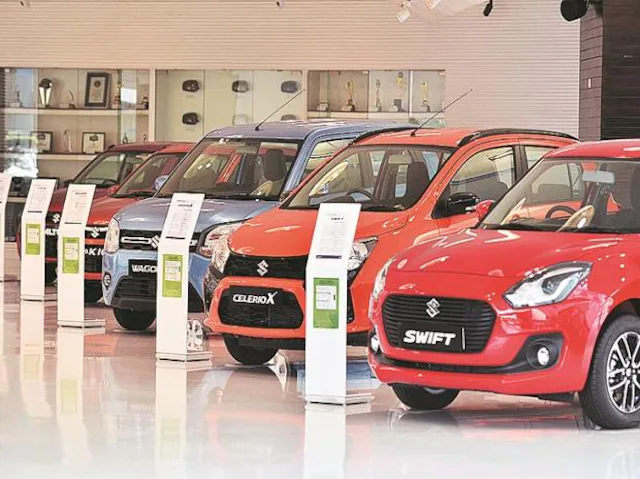
The transition to BS6 norms from BS4 came into effect on April 1, 2020. This pushed vehicle prices across segments as manufacturers developed new engines that met the rigorous BS6 emission rules. In the year following the introduction of BS6 engines, the price of top models like Honda Activa and Hero Splendour and TVS Jupiter became costlier by 10 to 11,000 rupees.

Meanwhile, the passenger vehicle segment put up a strong show last year, with dispatches rising 13% to 3.07 million units. This segment has recovered to 91% of FY19 level. (below gfx for this para, convert to bar graph)

But this recovery was completely led by a stupendous growth in the sales of utility vehicles, given India is in the midst of an SUV boom. Sales of utility vehicles registered a 40% jump to 1.49 million units while passenger car sales declined by 4.8% to 1.46 million units.

India’s automakers appear to have put the challenges of Covid-19 behind them as sales surpassed 2019 levels in the month of May this year for major car makers like Maruti Suzuki, Hyundai, Tata Motors and Mahindra & Mahindra.  (below gfx for 

Two-wheeler sales remained sluggish but they benefited from some pent up demand and wedding season in the first two months of the financial year. People returning to offices and reopening of educational institutions is also helping Two-wheeler sales this year.

Anuj Sethi, Senior Director – Ratings, CRISIL says, growth momentum in PV sales will continue this year. If not for the chip shortage, sales in FY22 would’ve been higher, he said adding that chip availability is expected to improve from the second half of this year. PV sales can touch 34 lakh units, crossing FY19 record. Income levels in rural markets were impacted in last 2 years and 2W sales expected to register 5-6% growth.  

While semiconductor shortage remains the major challenge for carmakers, Maruti Suzuki Chairman RC Bhargava has said the government’s plan to make six airbags mandatory in passenger vehicles from October 1 will make small cars more expensive and drive out a chunk of potential buyers.

Providing driver and front passenger airbags in all cars is already mandatory.  Adding another four airbags will increase the cost by Rs 17,600, according to auto market data provider JATO Dynamics.

In some cases, the cost could be higher as companies will be required to make engineering changes to the car’s structure to accommodate the additional airbags.

Buyers of entry-level cars are much more price-sensitive compared to the bigger car segment.

Meanwhile, the government also increased the third-party (TP) motor insurance premium for various categories of vehicles with effect from June 1, which will jack up the insurance cost of cars and two-wheelers—making their on-road version more expensive.

TVS Motor Company CEO KN Radhakrishnan said this will hamper the efforts of the industry to recover.

CRISIL’s Anuj Sethi says interest rates are still attractive despite the recent repo rate hike by RBI. Further, the reliance of two-wheeler buyers on financing is also coming down. From 70% pre-pandemic, less than 50% of new two-wheelers are purchased on EMIs, he added.

On the other hand, a media report said on Thursday that India’s top listed automotive and ancillary companies have earmarked Rs 30,000 crore for capital expenditure in FY23.

Tata Motors this week signed an agreement to potentially buy Ford’s plant in Gujarat’s Sanand as it looks to ramp up its production of electric vehicles while Mahindra Group has committed Rs 15,300 crore for capex between FY22 and FY24.

Last month, market leader Maruti Suzuki had announced a new factory in Haryana, the company’s third in the state entailing a total investment of 18,000 crore rupees.

Anuj Sethi, Senior Director – Ratings, CRISIL, says FY23 capex is 30-35% higher than previous year. Driven largely by OEMs in passenger vehicle space. In 2W space, investments are being directed toward EVs

Sethi says that the order backlog for passenger vehicles caused by chip shortage last fiscal year is expected to contribute to this year’s high growth. He says the backlog could be anywhere between 4-6 lakh vehicles. But this figure could be inflated because consumers tend to make multiple bookings with different companies, and not all of it would translate into sales. Sethi believes that the actual number could be closer to 3-3.5 lakh. Nevertheless, PV sales could touch a new record this year.

Sethi also said that some amount of inventory buildup is required by dealers which could help OEMs in dispatches. The normal inventory level with dealers is about 25-30 days which has now come down to 12-15 days.

For the two-wheeler segment, although the expected 5-6% growth this fiscal is not impressive, especially coming after three years of consecutive negative growth, it would still mark the beginning of a turnaround.

The most important tech company you’ve never heard of

Top tech companies turn to a Dutch firm for ultra-advanced machines to make chips. The machines use light beams to make narrow circuits on chips – which are now the backbone of the world economy

It is Europe’s most valuable tech company. Its market cap has gone from $25 billion to $225 billion in a decade. And eight months ago, it hit a lifetime high of over $350 billion. This Dutch company made almost $20 billion in net sales and over $6 billion in profits last year.

Yet, the chances are you may not have heard about it.
The company, ASML Holdings, describes itself as the “most important tech company you’ve never heard of” and rightly so.
ASML is one of the world’s leading manufacturers of chip-making equipment. It designs and manufactures lithography machines– an essential component in manufacturing microchips which go into smartphones, data centres, personal computers, laptops, cars and much more.

ASML makes lithography systems, used to create the circuitry of computer chips. Its lithography systems can be found in the factories of every major chipmaker in the world. ASML’s most advanced machines use a wavelength of light called EUV, which stands for extreme ultraviolet.
The machine uses EUV light beams, generated by lasers and focused by giant mirrors, to lay out extraordinarily narrow circuits on slabs of silicon known as wafers.

That in turn makes it possible to create faster and more powerful microprocessors, memory chips and other advanced components, which are critical for consumer electronics and military applications alike.

A lithography system projects light through a blueprint of the pattern onto a photosensitive silicon wafer. After the pattern is printed, the system moves the wafer slightly and makes another copy on the wafer.
This process is repeated until the wafer is covered in patterns, completing one layer of the wafer’s chips. To make an entire microchip, this process is repeated layer after layer, stacking the patterns to create an integrated circuit (IC).

The simplest chips have around 40 layers, while the most complex can have over 150 layers.
Only a few companies, including America’s Intel, South Korea’s Samsung Electronics and Taiwan’s TSMC, are currently capable of manufacturing the most sophisticated chips. And they’ve come to depend on ASML to make them.

11,000 of its 32,000-strong workforce is engaged in Research and Development (R&D). Since 2000, ASML has rapidly taken market share from Japanese competitors Nikon and Canon, which now mainly focus on older technology. ASML controls more than 90% of the lithography market and no competitor is attempting to build an EUV system, citing high development costs.
Amid a global chip shortage, the demand for ASML’s systems is higher than its current production capacity.

Last year, it sold 42 extreme ultraviolet or EUV systems and this year it expects to ship 55 units. It is the only manufacturer of EUV systems that are used in making the world’s fastest microprocessors.
ASML says its job is to help the industry continue Moore’s Law. In 1965, Gordon Moore, one of Intel’s co-founders, observed that the number of transistors on a microchip was increasing rapidly, exponentially increasing the computing power while decreasing the cost of the chip.

Moore predicted that the number of transistors would double every year for the next decade. In 1975, he revised the prediction to every two years. His prediction has proved to be true and today’s microchips contain tens of billions of transistors.

ASML’s EUV machine pushes Moore’s Law forward and chip makers cannot produce leading-edge chips without it.
Delivering just one of these takes three Boeing 747 cargo planes, 40 freight containers and 20 trucks. The bus-sized machine comprises 100,000 parts, weighs nearly 200 tonnes and costs around $150 million. A cutting-edge chip plant needs 9-18 of these machines, which are one of the biggest capital costs for chipmakers. ASML’s next iteration of the system, known as “High NA” EUV machines, will be even larger, and cost around $300 million each.

Instagram announces new features, expands Reels duration to 90 seconds

With an aim to help creators engage more with their audience, platform Instagram has announced that it is rolling out new features, including 90 seconds Reels

With an aim to help creators engage more with their audience, the photo-sharing platform Instagram has announced that it is rolling out new features, including 90 seconds Reels.

The Meta-owned platform said that it is now extending the length of Reels up to 90 seconds, which will help users express their most authentic selves on Reels.

“You will have more time to share more about yourself, film extra behind-the-scenes clips, dig deeper into the nuances of your content, or whatever else you want to do with that extra time,” the company said in a blogpost.

Instagram also said that users can now import their own audio directly within Instagram Reels.

“Use the import audio feature to add commentary or background noise from any video that is at least five seconds long on your camera roll,” the company said.

“Make sure that you like how your voice sounds in the recording because others might use it in their reels, too!” it added.

A new feature also lets creators poll their audience on what should happen in their next video so that they can help shape the storyline themselves.

The Meta-owned platform said that it has recently launched Templates, which allows users to easily create a reel using another one as a template. It pre-loads the audio and clip placeholders, so all users have to do is add and trim their unique clips.

“We will continue to invest in building new ways for you to connect with your audience and entertain on Reels. We can’t wait to see what you come up with and the creative ways you use these new tools!” the company said.

Apple WWDC 2022: Here’s what you can expect from keynote, says report

As the Worldwide Developers Conference (WWDC) 2022 is approaching, reports say that tech giant Apple’s operating systems are expected to be the centerpiece of the keynote.

As the Worldwide Developers Conference (WWDC) 2022 is approaching, reports say that tech giant Apple’s operating systems are expected to be the centerpiece of the keynote.

According to TechCrunch, users are certainly going to hear the latest on iOS, iPadOS, macOS and watchOS, as well as some wildcards like tvOS at WWDC, which is scheduled to begin on June 6.

The first look at iOS 16 will likely arrive with an early developer beta, meaning if you have an Apple dev account, you can get access, not long after the keynote.

The biggest changes are apparently in store for the lock screen, notifications, Messages and Health.

The update could bring some widgets to the real estate, by way of the “Today View”, including key bits of information like weather, calendar entries and shortcuts to favourite apps, beyond the existing camera and flashlight buttons.

The features appear to be setting the stage for a version of the iPhone 14 with the sort of always-on display currently offered on the Apple Watch and some Android handsets.

A new version of the Messages app is said to be getting more social functionality, as well as new audio message functionality. The iPhone’s Health app is also reportedly getting some new features.

iPadOS, meanwhile, could be getting multitasking improvements designed to make the tablet operating system more competitive with laptops.

That could include an improvement to the way iPads handle application windows for a more desktop-style experience that could further separate the OS fork from its mobile counterpart, the report said.

tvOS remains a big question mark, especially after the operating system got virtually no love at last year’s event.

Meanwhile, a recent report said that it is unlikely that the tech giant will announce its mixed reality headset at WWDC this year.

The WWDC will kick off on June 6 for more than 30 million Apple developers around the globe.

Throughout the week, developers will be able to connect directly with Apple engineers and designers through labs and Digital Lounges for guidance on building innovative and platform-differentiating apps and games.

Motorola unveils new smartphones in India: Check design, specs and price

The smartphone comes with 6.5-inch IPS LCD display along with 90Hz refresh rate, 16MP triple rear camera setup, 5000mAh battery and much more

Motorola on Thursday launched a new affordable smartphone “moto e32s” that comes with high refresh rate and triple camera setup for Indian consumers.

With a starting priced at Rs 8,999, the smartphone comes in two storage variants — 3GB+32GB and 4GB+64GB — and two colour options — slate gray and misty silver.

“Aimed at giving the most premium, contemporary, and durable designs in the budget segment, the moto e32s comes with a premium PMMA finish, an ultra slim and durable design with segment’s first IP52 rating,” the company said in a statement.

The smartphone comes with 6.5-inch IPS LCD display along with 90Hz refresh rate, 16MP triple rear camera setup, 5000mAh battery and much more.

The mote e32s also features class leading security features and performance with a side mounted fingerprint sensor and MediaTek’s latest octa-core processor with LPDDR4X RAM that provides exceptional performance for its segment.

The e32s also comes with segment’s best connectivity features including dual band WiFi and 2X2 MIMO for the most optimized broadband and 4G connectivity.

The company said that the newly launched smartphone will be available across retail stores through JioMart, JioMart Digital, Reliance Digital, and on Flipkart from June 6.

Twitter to shut down TweetDeck dashboard for Mac application from July 1

Microblogging site Twitter’s social media dashboard application for management, TweetDeck, will no longer be available as a standalone Mac app from July 1.

Microblogging site Twitter’s social media dashboard application for management, TweetDeck, will no longer be available as a standalone Mac app from July 1.

When launching the TweetDeck for the Mac app, Twitter has started placing a blue banner at the top warning users that it will only be available for one more month, reports 9To5Google.

“We are saying goodbye to TweetDeck for the Mac app to focus on making TweetDeck even better and testing our new Preview,” a tweet from the TweetDeck team reads.

“July 1 is the last day it will be available,” it added.

As per the report, TweetDeck for Mac just got an overhaul last year that brought it in line with the web version.

At the time, the company admitted the app had not been getting “a lot of love” and that it was an example of “a Twitter-owned and operated service that we will continue investing in,” it added.

Another strange part of the abrupt cancellation of the TweetDeck Mac app is that it should not require any maintenance effort for Twitter since it is a website wrapper implementation.

Last year, the microblogging site announced a new and improved version of TweetDeck. At that time, it was testing the new features with a small group of users in the US, Canada and Australia.

Google TV app is now available on Apple App Store for iPhones: Details here

Google TV app, which aggregates content recommendations from streaming services and lets users create a universal watchlist of their favorites, is now available on iOS

Google TV app, which aggregates content recommendations from streaming services and lets users create a universal watchlist of their favorites, is now available on iOS.

The tech giant said that it will replace the previous Google Play Movies and TV app in the App Store, so if users have already got that installed, they should be able to update it to the Google TV experience, reports The Verge.

The software, already available on Android, also allows users to rate what they have previously viewed to improve future recommendations.

More important for Android TV or Chromecast with Google TV owners is that users can use the Google TV app as a remote control for those devices by tapping the remote icon.

Not every major streaming service allows its content to be included in Google TV’s rows of aggregated recs, Netflix is the big holdout, the report said.

The company bowed out of Google TV integration very shortly after the release of the 2020 Chromecast, and Google has been unable to bring Netflix back into the fold ever since.

The Google TV app will also contain a library of rentals and purchases from Google.

Xiaomi OLED Vision TV review: Economical option in premium smart TV segment

The Xiaomi OLED Vision TV is a good screen for watching content, but look elsewhere if you need a television that doubles up as a capable monitor for use with current generation gaming consoles

Chinese electronics maker Xiaomi recently launched its maiden OLED TV in India. Called the Xiaomi OLED Vision TV, the smart television is currently available in 55-inch screen size at Rs 89,999. Though cheaper than most OLED TVs from established brands such as Sony, Samsung, and LG, the Xiaomi’s TV does not cuts corners on any major features, technology or otherwise. It boasts an optical light-emitting diode-based screen panel of 4K UHD resolution with support for wide range of high dynamic range formats such as Dolby Vision, HDR10+, HDR10, HDR, and HLG. The TV has eight-way speakers system with Dolby Atmos and DTS for audio experience to match the premium visual experience enabled by the OLED panel. The Xiaomi OLED Vision TV seems to be a modestly priced smart television to experience OLED difference. Is it? Let’s find out:

Starting with the design, the Xiaomi OLED Vision has a premium metallic frame neatly holding its modestly sized 55-inch screen. The screen dominates the entire front profile for distraction free viewing experience. The rear profile of the television, however, seems to be done as an afterthought. There is a huge bulge on the lower rear side of the television. Though not a visual distraction, it may make the television look odd hanging on the wall. It could be one of the reasons Xiaomi did not include gears required for wall mount set-up in the package, but legs for the table top installation. Speaking of table top installation, the legs raise the television to some extent but not enough to leave room for a soundbar to sit in front without blocking some portion of the screen.

Xiaomi OLED Vision TV

Xiaomi OLED Vision TV – Metallic leg standComing to the screen, it is a good one for an economical OLED television. The screen is bright, vivid, and responsive. It is a delight to watch 4K content, especially HDR movies, shows and docuseries. It works so even for fast-paced content, thanks to built-in tech for motion smoothing. The TV supports IMAX Enhanced for cinematic experience, but the lack of content makes it a novelty with no actual benefit at present. The screen is good for watching content, but falls short for gaming purpose. It is a screen of 60Hz refresh rate, which is not optimal for best experience, especially for those with one of the new-gen gaming consoles such as Xbox Series X (review) and Play Station 5 (review). Besides, there is no support for adaptive sync technologies such as Nvidia G-Sync, FreeSync, VRR, etc.

ALSO READ – Xiaomi Mi QLED TV 4K review

Complementing the visual experience is the eight-way speaker system of 30W peak output. On paper, the peak output may seem to be on the lower side but is not. The speakers are loud and clear, and, together with Dolby Atmos and DTS, deliver wholesome audio experience.

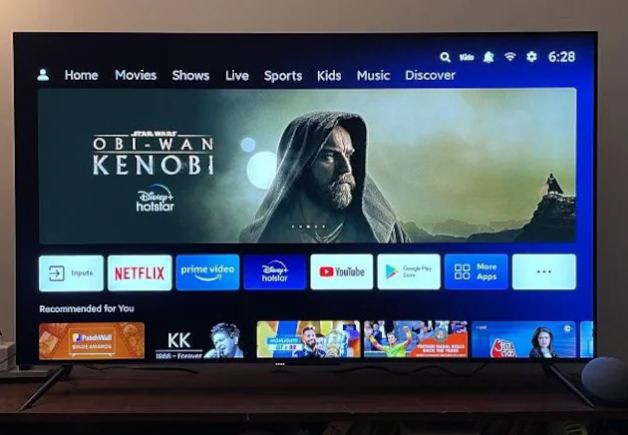
Rounding up the package is the smooth performance and user experience. The Xiaomi OLED Vision TV boots Android 11 TV operating system with Xiaomi PatchWall loaded separately as secondary interface. The default Android interface is familiar with suggested content from apps visible on the home screen. The PatchWall is similar with regard to navigation but with better apps integration and content filters. Both the Android and PatchWall interfaces work smoothly without interruptions, slowdowns, and lags. That said, the performance is good and it translates to consistent user experience.

Xiaomi OLED Vision TV

Xiaomi OLED Vision TV – Far-field microphone arrayThe Xiaomi OLED Vision TV comes with a petite-looking remote controller. It is a Bluetooth-enabled remote with a minimal design and hotkeys for Amazon Prime Video and Netflix, besides other buttons. The remote lacks a dedicated mute button, but a long press on volume-down mutes the audio in no time. Likewise, there is no dedicated key to go to settings directly, but a long press on the PatchWall button opens quick settings for picture, sound, input and more.

Verdict

The Xiaomi OLED Vision TV is an economical option in the premium OLED smart television segment. It is a good screen for watching content, but look elsewhere if you need a television that doubles up as a capable monitor for use with current generation gaming consoles. That said, the Xiaomi OLED Vision TV is good for most part, but not the best. Yet it makes a good buy because of its price and the features it bring to the table.

Design a site like this with WordPress.com
Get started