
Fabin Rasheed, co-creator of a poet-artist bot, explains why AI in art is laden with possibilities
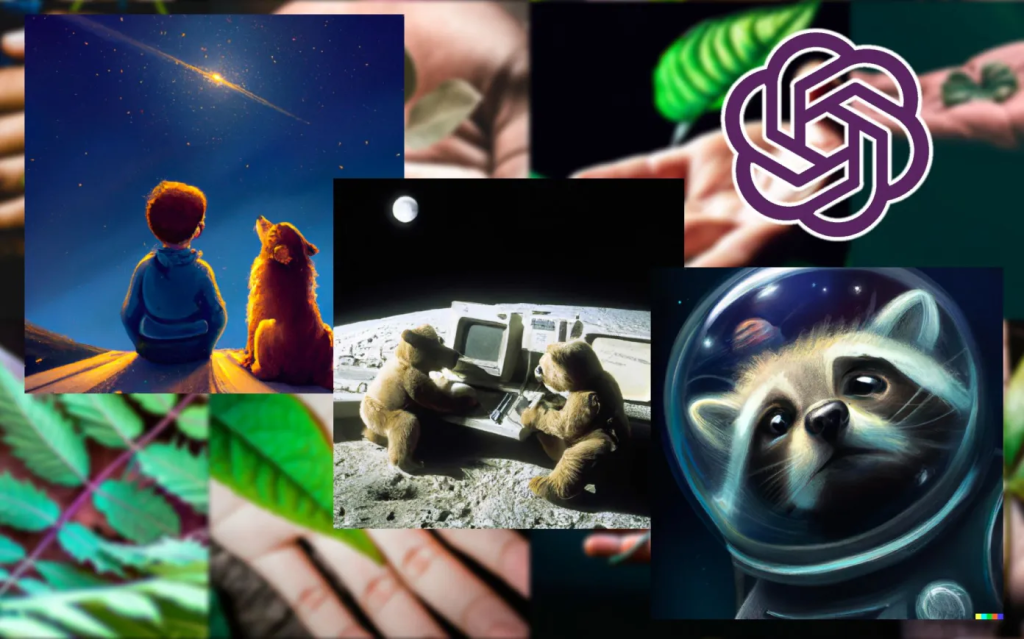
Artificial intelligence-generated artworks have been a subject of intrigue and debate in the creative world for a while now. The arrival of tools such as Dall. E 2, Stable Diffusion and Mid journey, which can generate art within seconds of a text prompt being fed in, has only made this question more pronounced: “Does AI-generated work qualify as art?” Fabin Rasheed, an alumnus of the Indian Institute of Technology (IIT) Hyderabad, who has been creating complex, layered artworks using AI, tells Veenu Sandhu why he thinks this is yet another expression of human creativity.
Rasheed’s latest work, titled “The Dreamcatcher”, was displayed at the Museum of the Future, an exhibition space in Dubai that showcases futuristic ideas, products, and services, on November 18. He is also the co-creator of arguably the first AI poet-artist, named Auria Kathi, living completely in the cloud. Auria Kathi has been described as “a robot, a machine, a piece of code which creates art regularly and posts on Instagram and keeps creating engagement”.
Edited excerpts of the interview:
- What inspired you to create AI-based artwork?
The fact that these works could create hitherto impossible connections in creativity is what inspired me to begin with AI-based works. The possibility of augmenting human creativity with highly advanced technology to initiate new creative expressions has always given me a sense of wonder.
- Could you tell us more about Auria Kathi, “the first artificially intelligent poet-artist” that you have created?
Auria Kathi was a social media experiment that I created with my friend Sleeba Paul in 2018 to investigate the question: “What if there is a non-human artist that exists among us in the digital world?”
Auria was essentially an autonomous bot, which posted generated poetry and art to social media automatically for one year (January 2019-December 2019). These poetry and artworks were generated using machine learning algorithms trained on a collection of haikus and digital art. (The creators even gave Auria Kathi a generic ‘generated’ face; her ‘works’ can be found at http://www.instagram.com/auriakathi/)
The bot also styled the works based on a “mood” before it was posted to social media. The question that drove us to explore this work took us to the heart of where one of the biggest art and cultural revolutions, the Renaissance, happened: we were invited to exhibit the work at the Florence Biennale 2019. Furthermore, this was exhibited at NeurIPS, one of the primary conferences in artificial intelligence worldwide.
- Have you used platforms/tools such as DALL.E 2 and Stable Diffusion as well to create art?
Yes, I do use Dall.E 2, Stable Diffusion, and Mid journey in some of my works.
- How does AI work to allow for the artwork to be created? What existing sources does it draw from?
This question really depends on the AI model that is used. For example, Dall.E converts text prompts into a corresponding image equivalent using a model called CLIP. CLIP essentially is trained on a dataset of image-caption combinations to link textual semantics to visual representations.
- Is there a risk of the very same artwork being created if, say, two people punch in the very same text at the very same moment? Does AI-based art promise the uniqueness intrinsic to art?
As far as I know, there is a randomizer applied to models like Dall.E, which ensures that no two images are the same for the same text prompt. Having said that, I have seen cases where some images look similar, but not necessarily the same.
To respond to your subsequent inquiry, the uniqueness of workmanship is essentially a reminder of human imagination, as indicated by me. Regardless of whether we are utilizing computer-based intelligence models, we would be “arranging” or choosing which explicit picture to utilize. That truly would rely upon our own human characteristics, which in all actuality do deliver uniqueness to these manifestations.
- In your experience, in what ways does AI allow for greater expression of creativity?
Historically, with the invention of a new tool, there have always been new forms of expression have come up, which expand human creativity. In the same way, I feel, AI could be used (at least in its current state) as a tool or a helper to augment or enhance human creative expressions.
I generally say that innovativeness is steady and the apparatuses, mediums and all the other things are the factors. The manner in which we truly utilize these computer-based intelligence models pushes the limits.
For instance, a few days ago I showed one of my works at the Gallery Representing things to come in Dubai, which was a 3D generative model that was made in view of my brainwaves and a photo of my psyche. To get this “photo”, I basically went into a hypnagogic state
- Christie’s was the first major auction house to sell an AI-created artwork. Is there a market for art so created? Have you, personally, been able to sell your AI-based art?
Yes, there is a market for AI art, especially through NFTs (non-fungible tokens). I have sold many AI works in the past. For example, one of the works that I created with my wife Ashna Sahir, called “Humachine Imaginarium”, was an early exploration into what a language model like GPT3 visualizes. This sold for $15,000 two years back.
- Is artificial intelligence set to become art’s next medium? Or is it just something that has novelty value?
I see AI as a natural progression of human evolution. And I feel in the near future, AI will be so ubiquitous that every digital (and many physical) works will have some or a lot of AI intervention in them. We wouldn’t actually refer to it as “Computer-based intelligence workmanship” later on, taking into account the speed at which simulated intelligence is turning into a piece of our lives.
 Techno World