Lava Blaze Pro review

Powered by the MediaTek Helio G37 processor, the Lava Blaze Pro is priced at Rs 9,999 – at par with rival smartphones powered by the same chip such as Motorola Moto G22 and Techno Spark 9

Home-grown electronics brand Lava recently launched its second smartphone in the Blaze series, the Lava Blaze Pro. Powered by the MediaTek Helio G37 processor, the smartphone is priced at Rs 9,999 – at par with rival smartphones powered by the same chip such as Motorola Moto G22 and Techno Spark 9. The smartphone brings a few upgrades to justify the ‘Pro’ moniker, but are they good enough? Let us find out

Design

The Lava Blaze Pro looks identical to its predecessor, the Lava Blaze, except it has a frosted glass back design. The phone’s frame is made of plastic with a smooth finish, which gets easily smudged with fingerprint marks. On the frame, there is a power button on the right, which doubles as a fingerprint scanner, and a volume button just above it. The button placement is appropriate, making one-handed operation comfortable.

Display and audio

The Lava Blaze Pro sports a 6.5-inch IPS HD+ screen of 90Hz refresh rate. The screen is bright, vivid and responsive. Considering the phone’s price, the screen quality and performance is acceptable. It is set to standard colour profile by default, but can be tuned for vivid and cool colours from display settings.

As for the audio, the phone has a mono speaker on the bottom side of the frame. It is loud and clear, but lacks clarity. The speaker delivers modest experience while watching videos, listening to music, and playing games. Besides the mono speaker, the Lava Blaze Pro has a 3.5mm audio out port for wired connectivity.

Camera

Imaging is covered by a triple-camera system on the back, featuring a 50-megapixel primary sensor, 2MP ultra-wide-angle sensor, and a 2MP mono lens. From a price-performance ratio, the rear camera system is good. However, do not expect quality output. The camera struggles with zoom. The zoomed shots show lack of details and there is visible noise across the frame. Moreover, the camera tends to artificially smoothen the frame in the post processing, resulting in loss of details. On the front, the phone has an 8MP camera sensor. It is good for selfies and video calls, but struggles in low-light conditions.

Performance and battery

The Lava Blaze Pro is powered by MediaTek Helio G37 system-on-chip, paired with up to 4GB RAM and 64GB on-board storage. The phone has a microSD card slot for storage expansion (up to 256GB). It boots Android 12 operating system with stock user interface free from bloatware and advertisements. From a price-performance perspective, the Lava Blaze Pro works well. It handles regular operation with ease and does not slow down even with 15 apps opened in the background.

As for the on-battery time, the smartphone survives a day of moderate usage with the screen set at 90Hz refresh rate. For battery saving, the refresh rate can be reduced to 60Hz from settings. The Lava Blaze Pro discharges quickly and gets warm when used for power-intensive tasks. The phone comes with a 10W charger, which takes about an hour to recharge a completely drained battery.

Verdict

The Lava Blaze Pro is not perfect, but it can do all things to an extent. The smartphone has a good display and clean user interface. Aside to these, there is barely anything to make it outshine its peers in its price segment Rs 9,999.
Micromax In 2C review

With 3GB RAM and 32GB on-board storage, mediocre camera performance, and UNISOC T610 processor, the Micromax’s In 2C can be an option only for light users

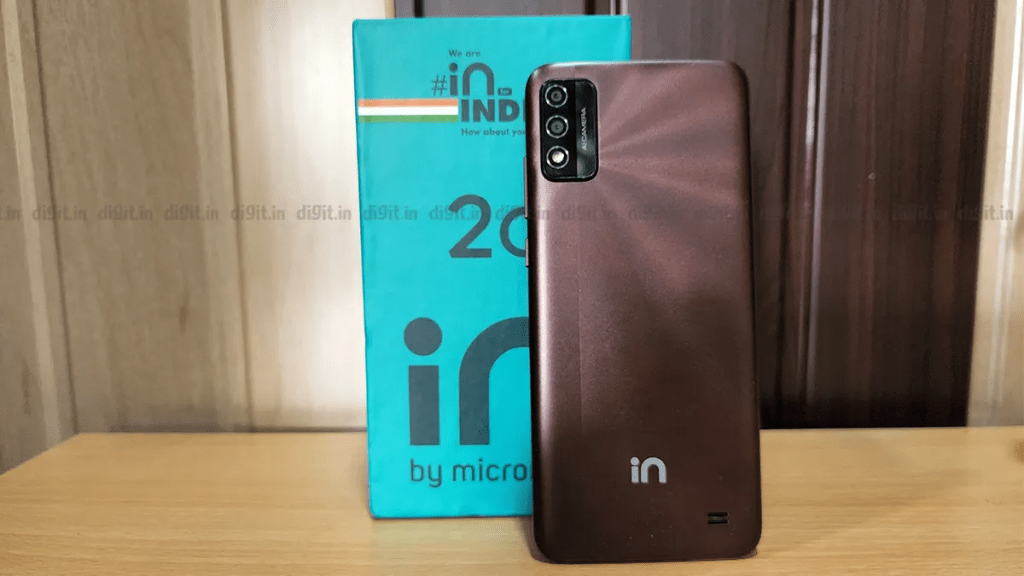
Home-grown electronics maker Micromax recently launched in India the Micromax In 2C. Priced at Rs 7,499, the smartphone fares well for basic operations such as calls, messages, web browsing, and streaming multimedia content, but lacks in terms of camera — a major feature for a smartphone buyer.

  • Camera

The Micromax In 2C sports a dual-camera array on the back — an 8-megapixel primary sensor paired with a 2MP depth sensor. On the front, there is a 5MP camera sensor. Details aside, the cameras’ performance is underwhelming and could have been better, especially for low light shots, which lack clarity. Using flash for indoor shots helped in getting a better shot, but overall imaging in low light was poor. Selfies also have the same issue, as the images appear blurry in dim light conditions.

For the outdoor shots, though better in comparison, the images lack sharpness. The other downsides are that the focus function fails to capture finer details in a frame and the colour contrast is slightly higher making the photos seem filtered.

The phone supports 1080p resolution video recording but the output comes out pixelated and seems to be an artificially upscaled version of 720p. Moreover, the cameras struggle in fixing focus several. The overall experience with the camera does not fare well compared to other budget phones in the same category.

Also read: Realme GT Neo 3 5G review

  • Design

The phone has a simple design with the power button and volume rocker placed on the right side of the frame. The positioning of the buttons is such that it is convenient for single-handed operation. The phone weighs 198 grams, though seen as heavy for some users it feels well balanced. It lacks a fingerprint scanner, so there is no sensor placed at the back like its predecessor In 2B. Though the camera bump on the back makes the phone wobble when placed on a flat surface, it does not slip. The phone has a mono speaker on the back. On the left side of the phone are the SIM and microSD card slots. It is a dualSIM phone with a dedicated slot for a microSD card for storage expansion.

  • Display

The Micromax In 2C sports a 6.52-inch HD+ display. The display is supported by an ambient light sensor, which auto sets the brightness based on lighting conditions. The adaptive brightness setting allows one to comfortably read in both sunlight and dimly lit indoor spaces. To minimise eye fatigue, especially during nighttime use, the phone has a night light mode that reduces the blue glare and gives the screen a neat tint, making it easier to read. The colours on the screen even when viewed from different angles remained clear. The screen is good but seems wanting for multimedia experience.

  • Performance

The Micromax In 2C is powered by UNISOC T610 processor, paired with 3GB RAM and 32GB on-board storage. It boots vanilla Android 11 operating system. Though the phone performs smoothly for day-to-day activities such as calls or texts, it picks up temperature and becomes warm after extended usage. There was also a lag issue while using 4-5 apps simultaneously and switching between them.

  • Battery

This is one area where the In 2C impresses, and for better. The phone’s 5,000 mAh battery keeps the show going for more than a day on regular usage. The phone has a USB-C port for charging and it takes the device over two hours to charge from zero to 100 per cent – through the 10W charger that comes with it.

  • Verdict

With 3GB RAM and 32GB on-board storage, mediocre camera quality and UNISOC T610 processor, the Micromax’s In 2C can be an option for light users. But for gaming, multitasking or long hours of usage, it is not the best phone in the budget range.

Design a site like this with WordPress.com
Get started