Get tech news and reviews, gadget news and launches, latest mobile phones, latest smartphones, laptop news, latest cameras, latest tablets, gaming news, internet technology
At Google I/O, the company released the Monk Skin Tone Scale, an open-source library to help make machine learning of images more inclusive by better interpreting tones and shades
Tech giant Google has added new filters in Google Photos that will help users show their skin in its true shade.
According to 9To5Google, with the Pixel 6 series, the tech giant worked to adjust the phone’s camera to more accurately capture the wide variety of human skin tones, so that people can see their true selves in photographs.
At Google I/O, the company released the Monk Skin Tone Scale, an open-source library to help make machine learning of images more inclusive by better interpreting tones and shades.
At the time, the company announced that the Monk Scale would soon be put to use within the Google Photos app to offer specialised filters that tweak the skin tones of people in photos users have previously taken.
As shared on Twitter, these new Real Tone filters are rolling out now to Google Photos users on Android, iOS, and the web.
Once the feature is live, users should have a suite of new options in the “Filters” tab of the Google Photos editor, with choices like Playa, Isla, Honey, and Desert.
According to Google, the filters were specially designed to “work well across skin tones”.
If the filter users have selected is one of the new ones, they should see an overlaid mention of “Made with Real Tone”. Each filter should also have adjustments users can make, to deeply refine any given picture.
Realme GT Neo 3 5G is a good performance-centric smartphone, but not an all-rounder. Though capable in every respect, it is exceptional in none
Expanding its line of premium smartphones in India, Realme recently launched the Realme GT Neo 3 5G 150W. The smartphone boasts industry-leading 150W fast charging tech, GT racing inspired twin-strip design on the back cover, 10-bit AMOLED screen of 120Hz refresh rate, dual stereo speakers, MediaTek Dimensity 8100 system-on-chip, and a flagship grade imaging system backed by 50-megapixel primary camera sensor. Touted by the Chinese maker as a performance-centric smartphone, the Realme GT Neo 3 5G 150W (priced at Rs 42,999) seems to be a value proposition in its segment. Is it? Let’s find out:
Design
The Realme GT Neo 3 5G comes in three colour options – nitro blue, sprint white, and asphalt black. The former two colours have a racing inspired twin-stripe design on the back cover, which looks bold without being loud. If you like minimal, there is an asphalt black colour option that is devoid of any fancy theme by design. The sprint white (review unit) colour variant has an anti-glare back cover made of glass. It feels smooth and soft to touch and does not accrue smudges easily. It is, however, not resistant to scratches due to lack of any protection on it. Likewise, the plastic frame coloured in black looks neat but is not durable and is easily scratched. The choice of construction material might not be the best, but it makes the phone lightweight and, therefore, comfortable to hold and operate. Moreover, there is protection where it matters the most, display that is. The phone has Gorilla Glass 5 on the front for protection against everyday abuses. In terms of design, the GT Neo 3 is the first Realme smartphone to sport a centre-aligned punch-hole for the front camera.
Display and audio
The Realme GT Neo 3 5G has a 6.7-inch fullHD+ 10-bit AMOLED screen of 120Hz refresh rate, made of E4 material. The screen is bright, vivid, and smooth. Its enhanced refresh rate improves everyday experience by rendering smoothly the user interface elements, transitions, and animations. The benefit of enhanced refresh rate extends to gaming performance and, together with a dedicated chip for frame rate interpolation, delivers a wholesome experience in supported games. The display is good for watching videos too and supports HDR10+ high dynamic range format. Complementing the screen is the dual stereo speakers with Dolby Atmos. The speakers are loud, clear, and balanced. That said, the display and audio are in sync with the performance-centric utility of the Realme GT Neo 3 5G.
Camera
The Realme GT Neo 3 5G has a triple-camera set-up on the back, featuring a 50-megapixel primary sensor (Sony IMX766) with optical image stabilisation (OIS) paired with an 8MP ultra-wide-angle sensor and a 2MP macro lens. On the front, the phone has a 16MP camera sensor.
Of the three cameras on the back, the primary 50MP sensor works wonders but the other two are mediocre at best. Speaking of primary camera, it takes detailed shots with good colours, modest dynamic range, and decent highlights and shadow details.
In low light, thanks to OIS, it works well. The ultra-wide-angle camera sensor captures a good amount of details but shows distortion on the edges. Unlike the primary sensor, the ultra-wide-angle sensor struggles in low-light conditions. Its low-light performance, however, lifts marginally through the phone’s built-in night mode. The macro camera is there for novelty. It is not bad, but difficult to use due to fixed focus. As for the front camera, it works well for both regular shots and portraits.
As for the videos, the Realme GT Neo 3 5G can do up to 4K at 60 fps from the primary sensor, 1080p at 30fps from ultra-wide-angle, and 1080p at 30fps from the front camera. The videos recorded by the primary sensor look good but the ultra-wide-sensor disappoints here as well. Videos recorded from the front camera look fine but the sensor’s narrow frame of view (FoV) makes it less suitable for anything other than recording self.
Performance
Though a performance-centric smartphone, the real life experience using the Realme GT 2 Pro 5G is a mixed bag. It is primarily because the MediaTek Dimensity 8100 is a new chip and not optimised for a lot of things. For example, a commonly played graphic-intensive gaming title ‘Battlegrounds Mobile India’ runs at HD graphics and does not support HDR graphics and ultra frame rates. Nevertheless, the phone works well in everyday use, even when used for power tasks. In its current form, it does not make the most out of its capable chip but is expected to get better with future software updates. Speaking of future updates, the GT Neo 3 5G will get at least two major Android upgrades and security updates for two years.
Interface
The Realme GT Neo 3 5G boots Android 12 operating system-based Realme UI 3.0 interface. The interface lacks any sort of content (themes, icons, transitions, etc) to complement its GT racing inspired design, which is surprising. Nevertheless, the Realme UI 3 is optimised and has no snags. Therefore, it works fine and seems polished. On the downside, there are many bloatware apps preinstalled, including some that cannot be uninstalled from the system.
Battery and charging
The Realme GT Neo 3 5G 150W is powered by a 4,500 mAh battery, which keeps the show going for more than a day on normal usage. The battery runs out of power quickly when used extensively for power-and-graphic intensive workloads. Thankfully, the phone ships with a 150W fast-charging adaptor, which takes about 20 minutes to charge the phone’s completely drained out battery to 100 per cent.
Verdict
The Realme GT Neo 3 5G is a good performance-centric smartphone, but not an all-rounder. It is a smartphone with something in store for everyone. Though capable in every respect, it is exceptional in none. In comparison, the Xiaomi 11T Pro (review) offers a whole lot more and it costs about the same as the GT Neo 3 5G.
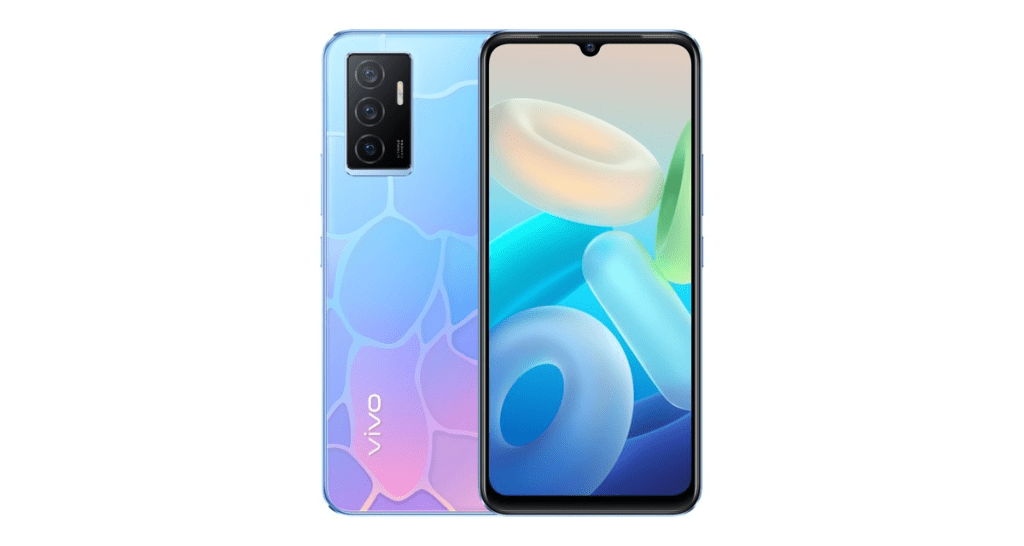
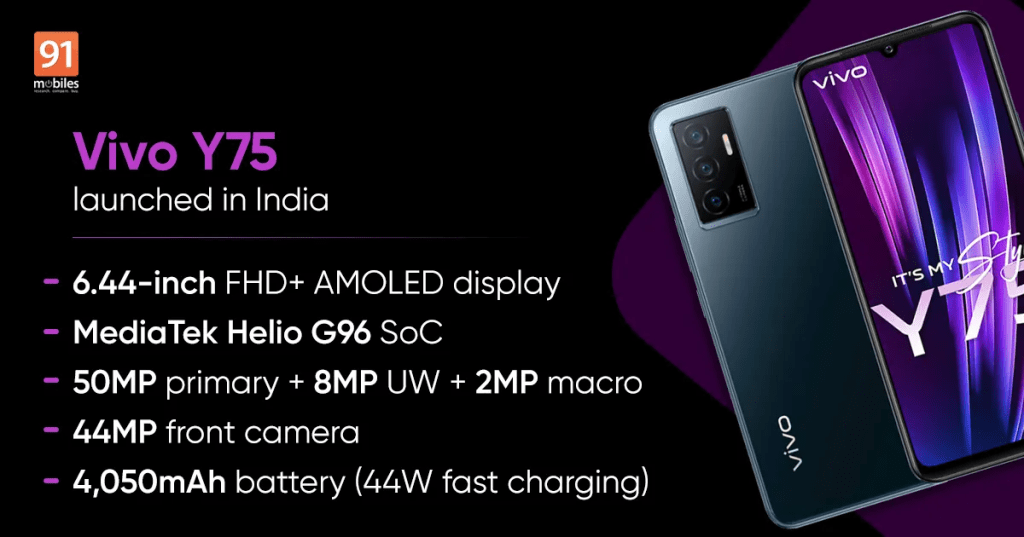
The new Y75 comes with a 6.44-inch 1080×2400 AMOLED screen with a 60 Hz refresh rate, the MediaTek Helio G96 SoC at the helm, and 8GB of RAM, 128 GB of expandable storage
After earlier announcing the Vivo Y75 5G officially, the company has finally also unveiled the 4G variant of the Android smartphone.
Vivo Y75 price in India, availability
The price of Vivo Y75 in India has been set at Rs. 20,999 for the sole 8GB RAM + 128GB storage variant. The phone comes in Dancing Waves and Moonlight Shadow colors and is now available for purchase through Flipkart, Vivo E-Store as well as offline retail stores.
Customers purchasing the smartphone using cards of ICICI, SBI, IDFC First Bank and OneCard can avail up to Rs. 1,500 discount as well.
Vivo Y75 specifications
The dual-SIM (Nano) Vivo Y75 runs on Funtouch OS 12, based on Android 11. The smartphone sports a 6.44 inch full-HD+ (1,080×2,400 pixels) AMOLED display. The Vivo Y-series phone is powered by a MediaTek Helio G96 4G SoC under the hood, paired with 8GB of RAM. The RAM can be extended up to 4GB using the additional inbuilt storage.
For optics, there is a triple rear camera setup along with a rear flash. The camera unit houses a 50-megapixel primary sensor with an f/1.8 aperture, an 8-megapixel wide-angle depth sensor with an f/2.2 aperture, and a 2-megapixel macro sensor with an f/2.4 aperture. For selfies and video chats, the Vivo Y75 has a 44-megapixel autofocus sensor at the front. The camera unit of Vivo Y75 comes preloaded with a list of camera modes, including ultra-wide night, super macro, portrait mode, live photo and bokeh mode among others. The smartphone has 128GB of inbuilt storage, which can be expanded via a microSD card.
Connectivity options on the Vivo Y75 include Wi-Fi, Bluetooth v5.2, GPS, BEIDOU, GLONASS, GALILEO, 3.5mm headphone jack and a USB Type-C port. Sensors onboard include an accelerometer, ambient light sensor, gyroscope, proximity sensor, and e-compass. The phone also comes with a fingerprint sensor for authentication.
The new Vivo Y75 packs a 4,050mAh battery with support for 44W flash charging via a bundled charger. The Moonlight Shadow colour variant of Vivo Y75 measures 160.87×74.28×7.36mm, while the Dancing Waves variant measures 160.87×74.28×7.41mm. The smartphone weighs 172 grams.
TikTok, which is owned by China’s ByteDance, also plans to roll out gaming more widely in Southeast Asia
TikTok has been conducting tests so users can play games on its video-sharing app in Vietnam, part of plans for a major push into gaming, four people familiar with the matter said.
Featuring games on its platform would boost advertising revenue as well as the number of time users spend on the app – one of the world’s most popular with more than 1 billion monthly active users.
Boasting a tech-savvy population with 70 percent of its citizens under the age of 35, Vietnam is an attractive market for social media platforms such as TikTok, Meta Platforms’s Facebook, and Alphabet’s YouTube and Google.
TikTok, which is owned by China’s ByteDance, also plans to roll out gaming more widely in Southeast Asia, the people said.
That move could come as early as the third quarter, said two of them. The sources declined to be identified as the information has yet to be publicly disclosed.
A TikTok representative said the company has tested bringing HTML5 games, a common form of minigame, to its app through tie-ups with third-party game developers and studios such as Zynga. But it declined to comment on its plans for Vietnam or its broader gaming ambitions.
“We’re always looking at ways to enrich our platform and regularly test new features and integrations that bring value to our community,” the representative said.
Vivo X80 5G series launched today: The Vivo X80 Pro 5G and Vivo X80 are powered by the company’s proprietary V1+ imaging chip, which is touted to enhance the gaming and imaging experience
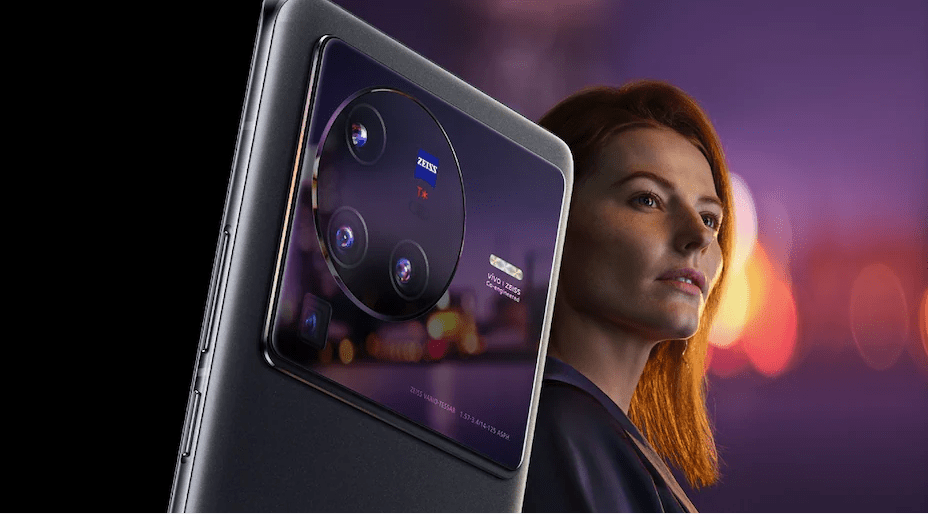
Chinese smartphone maker Vivo on Wednesday launched in India its premium flagship smartphones, the Vivo X80 Pro 5G and Vivo X80 5G. The smartphones are near identical in terms of design and features, but are powered by different system-on-chips and sport different camera sensors. These are Vivo’s maiden smartphones powered by its proprietary V1+ imaging chip for enhanced gaming and imaging experience. Here are the details of the Vivo X80 Pro 5G and Vivo X80 5G:
Vivo X80 Pro 5G: Specifications and price in India
This top-end smartphone in the Vivo X80 5G smartphone series is powered by Qualcomm Snapdragon 8 Gen 1 SoC, paired with a Vivo V1+ imaging chip. The phone boots an Android 12 operating system-based FunTouch interface. It sports a 6.78-inch WQHD+ resolution 3D curved AMOLED screen made of E5 material. The screen boasts LTPO tech for adaptive refresh rate, which ranges between 1Hz-120Hz. The smartphone has four camera sensors on the back and one on the front.
The rear camera set-up features a 50-megapixel primary sensor with optical image stabilisation, a 48MP ultra-wide-angle sensor, a 12MP telephoto sensor for portrait, and an 8MP periscope telephoto sensor with optical image stabilisation. On the front, the smartphone has a 32MP camera sensor. The phone is powered by a 4,700 mAh battery, supported by 80W fast wired charger and 50W fast wireless charger. The phone ships with 80W fast wired charger in the box. Other features include dual stereo speakers, X-axis linear vibration motor for haptics, IP68 for ingress protection against water and dust, and ultrasonic in-display fingerprint scanner.
The Vivo X80 Pro 5G will be available in 12GB RAM and 256GB configuration priced at Rs 79,999.
Vivo X80 5G: Specifications and price in India
This vanilla edition smartphone in the Vivo X80 5G smartphone series is powered by MediaTek Dimensity 9000 SoC, paired with Vivo V1+ imaging chip. The phone boots Android 12 operating system-based FunTouch interface. It sports a 6.78-inch fullHD+ resolution 3D curved AMOLED screen (E5 material) of 120Hz refresh rate. It boasts a triple-camera set-up on the back, featuring a 50-megapixel primary sensor, a 12MP ultra-wide-angle sensor, and a 12MP telephoto sensor for portrait. On the front, the smartphone has a 32MP camera sensor. The phone is powered by a 4,500 mAh battery, supported by 80W fast wired charger that comes as part of the package. Other features include dual stereo speakers and X-axis linear vibration motor for haptics.
The Vivo X80 5G will be available in 8GB+128GB and 12GB+256GB configurations priced at Rs 54,999 and Rs 59,999, respectively.
Both the smartphones will be available on Flipkart, Vivo India e-store, and retail stores from May 25.
After facing fines from European consumer and market regulators, Google has introduced an equal “Reject all” and “Accept all” buttons for tracking cookies on its platforms.
After facing fines from European consumer and market regulators, Google has introduced an equal “Reject all” and “Accept all” buttons for tracking cookies on its platforms.
Anyone visiting Search and YouTube in Europe, while signed…read more
Supply chain constraints and the fact that the tech giant does not want to release its first AR device in limited stock forced the company to push back the date again: Report
Tech giant Apple has reportedly delayed its augmented reality (AR) headset and will likely only launch at the beginning of the next year.
Supply chain constraints and the fact that the tech giant does not want to release its first AR device in…read more
The government has said that wants to make India a global drone hub by 2030. Promoting the drone-as-a-service model is one of the ways to achieve this target. Let us know more about it
As part of the Union Budget, Finance Minister Nirmala Sitharaman had said that the government would encourage start-ups to facilitate drone-as-a-service.
Drone-as-a-service enables enterprises to avail of various services from drone companies.
As NFTs are all the rage these days, Mark Zuckerberg is planning to let Instagram users mint NFTs on the social media platform
As NFTs are all the rage these days, Facebook chief executive officer (CEO) Mark Zuckerberg is planning to let Instagram users mint non-fungible tokens (NFTs) on the social media platform.
As per The Verge, Mark made the announcement at the session at South By Southwest, but did not provide a specific date for…read more
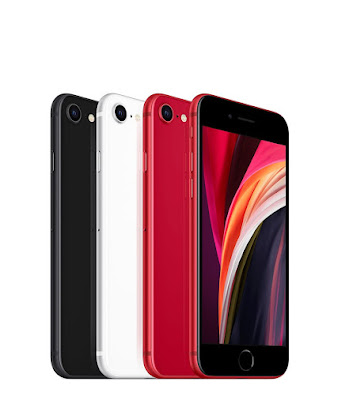
Tech giant Apple has announced it will be holding a spring special event on March 8 that will focus on a 5G-equipped iPhone SE and an update to the Mac mini
The event will start at 10 a.m. Pacific Time and will be viewable through the normal video streaming venues. This will be Apple’s first special event of 2022, following after the Unleashed event from October 18, reports AppleInsider.
The tech giant has a large raft of rumoured products set to launch throughout 2022.
While some are expected to arrive later in the year, such as the usual fall “iPhone 14” refresh, there’s a collection of products that…read more







 Techno World